

Quick Summary
Before choosing a Dynamics 365 partner, assess their Dynamics 365 experience, delivery approach, industry knowledge, support model, technical expertise, project cost, ongoing cost and TCO.
Key Takeaways
- Relevant Dynamics 365 experience matters more than the number of projects completed.
- Validate Microsoft credentials and the actual consultants who will deliver your project.
- Assess methodology, data migration, integrations, training and support before signing.
- Compare total cost of ownership, scope assumptions and long-term business value, not price alone.
Introduction
Microsoft Dynamics 365 can help an organisation improve how it manages sales, customer relationships, finance, operations, service, marketing, and business data. Still, the platform by itself is not enough.
What often separates a successful Dynamics 365 project from one that fails to deliver value is the partner you choose.
And as Dynamics 365 continues to bring more AI capabilities into everyday business processes, the question is no longer just whether a partner can implement the platform. It is whether they can help you make the most of what comes next.
A capable Dynamics 365 implementation partner goes beyond software configuration. They understand your existing business processes, discover improvement opportunities, manage integrations, prepare users for change, address data quality, and develop a roadmap for long-term adoption.
This is why you should not pick a Microsoft Dynamics 365 Partner just because of their pricing, Microsoft credentials, or the technologies they offer.
Before you sign an agreement, ask questions that show the partner’s techno-functional skills, how they handle projects, their industry experience, how they communicate, and how they will support your organisation after the system goes live.
Here are 13 important questions every business should ask before choosing a Dynamics 365 implementation partner.
Top Questions to Ask Before Selecting a Dynamics 365 Partner
Selecting the right Microsoft Dynamics 365 partner in the UK is critical to your project’s success.
Choose your Dynamics 365 partner with confidence
The wrong implementation partner can create unnecessary customisation, scope changes and long-term support challenges. Know what to ask before you commit.
To streamline your evaluation, begin by asking following essential questions:
1. How Much Experience Do You Have with Dynamics 365 Projects Similar to Ours?
Every Dynamics 365 implementation is unique.
For example, a small sales team using Dynamics 365 Sales will have different requirements than an enterprise deploying multiple Dynamics 365 applications across finance, supply chain, customer service, and operations.
Ask the potential Dynamics 365 partner:
- How many Dynamics 365 projects have you completed?
- Have you worked with companies of our size?
- Have you implemented specific Dynamics 365 applications similar to what we need?
- Which other industries have you served?
- Can you provide relevant case studies?
- What challenges did you encounter in similar projects?
The only key is relevance, not the volume.
A partner might have completed many projects, but if those projects do not match your company’s processes, regulatory needs, integrations, or size, their experience may not help you.
Look for relevant implementation experience, industry experience, measurable results, and transparent case studies.
2. What Microsoft Accreditations and Certifications Do You Hold?
When you look at possible partners, check their Microsoft credentials. Look at their technical skills and related experience.
Ask how the provider stays current with Microsoft technologies and whether its consultants understand the broader Microsoft ecosystem.
- Check the official credentials, for example, the Microsoft Solutions Partner for Business Applications designation.
- Ask if they have specific advanced specialisations relevant to your product.
The team involved in the proposal process may differ from the team responsible for project delivery.
3. Who will be Responsible for Implementing our Dynamics 365 Solution?
From a potential Dynamics 365 partner, ask for information about:
- Project Manager
- Solution Architect
- Functional Consultants
- Technical Consultants
- AI Professionals
- Integration Specialists
- Data Migration Specialist
- QA Professionals
- Training and Change-Management Specialists
Also, check if these professionals are employees, contractors, or third-party resources.
It is necessary to understand the level of experience possessed by people in charge of more important parts of your project.
A trustworthy partner should clearly explain how the project team is organised and what each member’s responsibilities are. Also clarify the process in place if a key consultant leaves during implementation.
4. How Does Your Methodology Ensure a Successful Dynamics 365 Implementation?
An effective implementation methodology provides a structured progression from initial discovery to deployment and ongoing support.
Ask the partner to explain their entire implementation process.
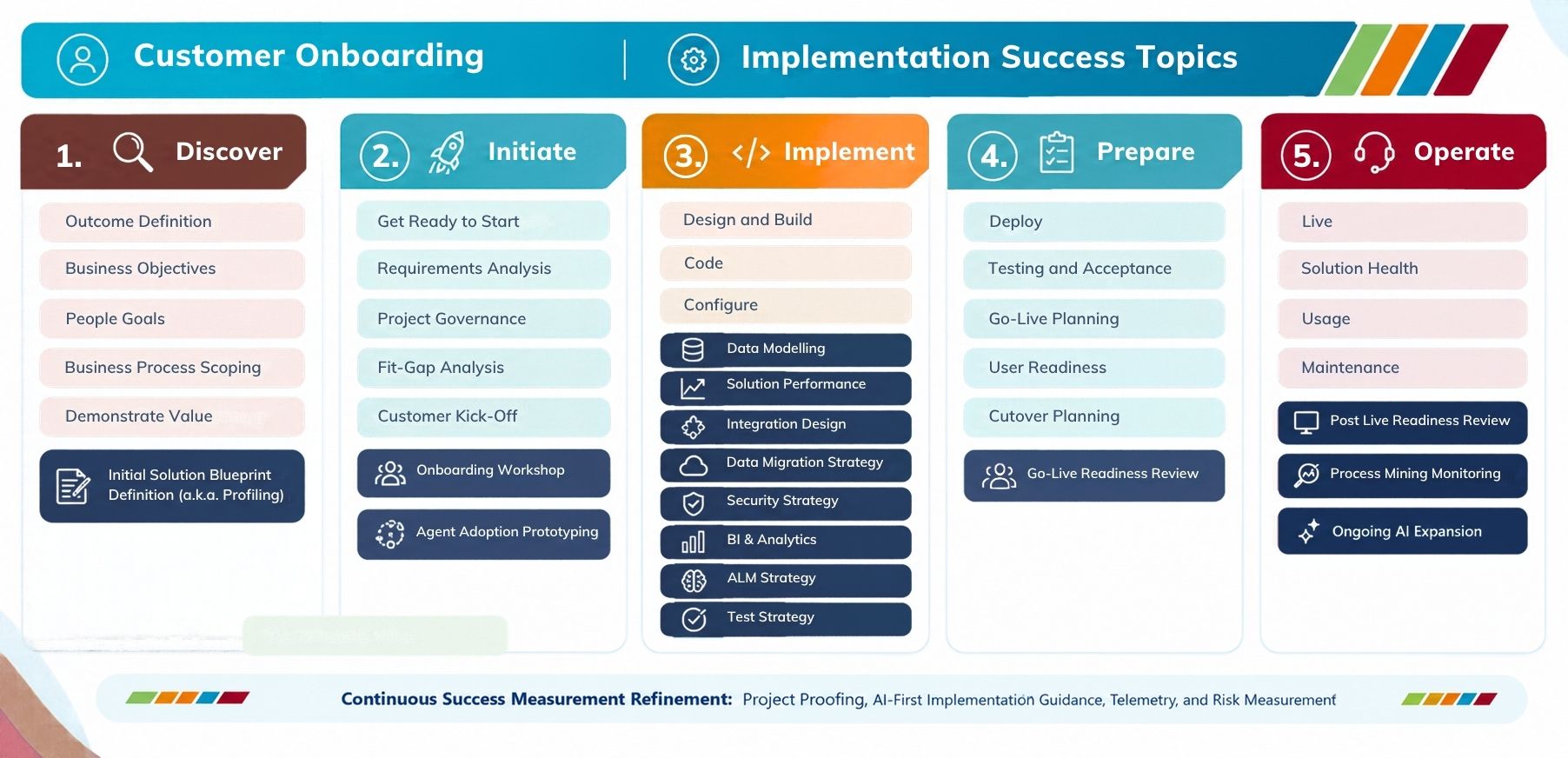
Do not accept vague responses like, “We’ll configure Dynamics according to your requirements.”
The partner should clarify how they differentiate between standard platform features, customisation, configuration, and third-party solutions. For example, Mercurius IT uses Success by Design in its entire implementation methodology.
This is important because unnecessary customisation can increase complexity, maintenance requirements, and future upgrade challenges.
5. How Much Specific Experience Do You Have with My Chosen Application?
When talking about the right Dynamics 365 partners in the UK, it is crucial to check whether they have the specific experience in the D365 application that is chosen by the business. Ensure you check the following-
- Expertise in projects related to Dynamics 365 spans like Business Central, Finance & Operations and D365 CRM suite.
- Ensure their core technical team specialises directly in the exact product you are planning to deploy.
The right Dynamics 365 expertise can change the outcome of your implementation
Make sure your partner has experience with the exact solution your business needs.
6. Have You Worked with Organisations of Our Size and Industry?
Each industry is unique, and so the solutions implemented should be.
Another interesting thing to consider when choosing a D365 partner is that you must verify if they have the expertise working with the organisation size and industry type.
An enterprise-level partner might be a poor fit for a UK SME, and vice versa. Ask for case studies or client references from businesses matching your scale, structure, and sector. Whether you are looking for a Dynamics 365 implementation in retail, healthcare, aerospace & defence, manufacturing, construction or any other sector, verifying the specific industry expertise is essential.
7. What Happens After Go-Live?
Go-live is a key milestone, but it does not mark the end of the ERP project.
Users may need additional guidance as they start using the new system in practice. Reports might need adjustments, priorities can shift, and new opportunities for process improvement may arise.
Before selecting a partner, clarify what their post-launch services include. Consider asking about:
- The transition from project delivery to ongoing support
- How users will raise questions or report issues
- The availability of continued training
- Regular reviews and system optimisation
- Support for new functionality and integrations
- Management of future business changes
8. How Do You Approach User Training and Adoption?
Software delivers ROI only when your team actively uses it.
- Ask which specific training programs, change management support, and documentation are provided before go-live.
The best support model depends on the organisation, but ownership, service expectations, and communication channels should be clearly defined before implementation.
A capable partner will support ongoing system improvement, rather than viewing go-live as the end of the relationship.
9. Can the Partner Support Your AI Adoption Journey?
Dynamics 365 is increasingly bringing AI into everyday business processes, so it is worth looking beyond the initial implementation. Ask whether the partner can help identify relevant AI opportunities, prepare your teams for adoption, and support you as these capabilities evolve.
Also check whether they have the right AI and Dynamics 365 expertise within their delivery team to turn potential use cases into practical business improvements.
10. How Can You Avail Support After Implementation?
Go-live is not the point at which support requirements disappear. Before selecting a partner, understand how support will work when your team needs help.
Ask whether they provide a knowledge base, SLA-based support and clear escalation processes. Check which support channels are available, such as an online portal, email, telephone or remote assistance.
It is also important to understand their support hours. Will help be available outside normal office hours, at weekends or during public holidays if a critical issue arises?
Finally, clarify how on-site workshops, remote activities and ongoing support will be managed after implementation.
11. How Will You Handle Data Migration and Custom Integrations?
Transferring old data into Dynamics 365 can be challenging. Ask how they make sure your data stays accurate and how they will connect the platform with your current tools, such as Microsoft 365, Outlook, or other apps.
12. Do They Begin with your Business Objectives?
When talking about ERP, it is better not to start with a long list of software features.
Start by talking about why your organisation wants to make a change. Maybe your current systems do not give you reliable information. Your teams might be entering the same data in different places, or manual work could be slowing things down. It could also be hard to support, connect, or grow your current system.
A good partner will ask what results your business wants to achieve, for example:
- Improving operational & financial visibility
- Integrating separate processes previously
- Reducing repetitive administration
- Establishing consistent working practices
- Supporting more informed decision-making
- Preparing the organisation for future growth
This approach gives your project a stronger starting point. It also helps you avoid extra setup or changes that do not match your business needs.
13. What Will the Total Cost of Ownership Be?
While price matters, the initial implementation quote does not reflect the full financial picture.
Request detailed information on the following areas:
- Licensing
- Implementation
- Integrations
- Data Migration
- Testing
- User Training
- Change Management
- Support Requests
- Third-Party Applications
- Future Enhancements
Consider asking:
“Which licensing costs are included in this proposal, and which could become additional costs later along with the license costs?”
Inquire about the process for managing scope changes.
A low initial quote can become much more expensive if key requirements are omitted or later classified as change requests.
A transparent partner will outline a clear commercial model and explain the assumptions behind their estimate.
Do not select the lowest proposal by default. Instead, assess total value, implementation risk, long-term maintainability, and anticipated business outcomes.
What could your Dynamics 365 implementation actually cost?
Get a clearer view of the costs behind licensing, implementation, integrations, data migration, training and ongoing support before you commit.
Choosing the Right Microsoft Dynamics 365 Partner in the UK

A successful ERP implementation requires more than selecting a recognised product. Clear objectives, realistic planning, engaged users, effective governance, and a partner who aligns technology with business goals are essential.
Before deciding, consider more than demonstrations and initial costs. Assess the provider’s industry expertise, discovery process, implementation approach, support model, and broader technical capabilities.
The right Microsoft Dynamics 365 Solutions Partner in the UK will support your implementation and help you create a connected, secure, and scalable technology environment.
Looking for a Dynamics 365 Partner in the UK?
Mercurius IT aligns Microsoft business applications with your broader technology strategy. Our expertise covers Microsoft solutions, managed IT services, cloud technologies, cyber security, data, and digital transformation, offering an integrated perspective beyond implementation.
Whether you are considering replacing a legacy ERP or CRM system, or evaluating your current partner’s support, we can help clarify your requirements and define the best path forward.
Speak to a Dynamics 365 Consultant today to discuss your requirements!
Still evaluating Dynamics 365 partners? Start with a conversation
Get an experienced perspective on your requirements, implementation approach, integrations and support needs before making your decision.
Frequently Asked Questions
What services do UK Dynamics 365 partners offer?
UK Dynamics 365 partners typically provide consulting, requirements analysis, solution design, implementation, configuration, customisation, data migration, integrations, testing, user training, deployment and post-go-live support. Many also provide ongoing optimisation and managed support for Dynamics 365 applications.
Depending on the partner, services may cover Dynamics 365 applications such as Business Central, Finance, Supply Chain Management, Sales, Customer Service and Field Service, alongside Microsoft Power Platform capabilities such as Power BI, Power Apps and Power Automate.
How to select a reliable Dynamics 365 partner in the UK?
To select a reliable Dynamics 365 partner, evaluate their relevant project experience, Microsoft credentials, industry expertise, implementation methodology, technical team, data migration capabilities, post-go-live support and total cost of ownership. Choose a partner whose capabilities align with your business requirements and objectives.