
If your organisation is still running Microsoft Dynamics NAV, 2025 is the year to plan your next step. Microsoft’s roadmap and support policy are clear: innovation and investment are focused on Dynamics 365 Business Central.
NAV versions such as NAV 2018 are already out of mainstream support and only receive extended support until January 2028, which service updates in between. These updates are managed for you in the cloud, and you can control the maintenance window to minimise disruption.
This article explains why moving from Dynamics NAV to Business Central in 2025 makes commercial, technical and compliance sense for UK organisations.
It also sets out a pragmatic migration approach and how Mercurius IT can help you get there smoothly.
Why Dynamics NAV is no longer enough
Support and security risk
NAV versions are governed by Microsoft’s Fixed Lifecycle Policy. Once mainstream support ends, customers no longer receive new features and most non-security updates.
Over time, this raises risk and technical debt. For example, Dynamics NAV 2018 left mainstream support on 10 January 2023 and enters end of support on 11 January 2028.
Upgrade friction
Traditional on-premises ERP upgrades are heavy projects. They tie up teams, delay adoption of new capabilities and can be skipped for years. Business Central online moves you to a predictable update model so you do not need major upgrades every few years.
Integration and AI limitations
The modern Microsoft stack expects cloud interoperability and AI services. Business Central online receives Copilot and agent capabilities on a rolling basis throughout each release wave, something legacy NAV simply was not designed to accommodate.
Compliance pressure in the UK
UK VAT requirements under Making Tax Digital require software that digitally stores records and submits VAT via recognised APIs. Business Central includes an HMRC-recognised MTD app, fraud prevention headers and guided setup for HMRC authorisation, which reduces compliance effort.
Why Business Central is the future

Cloud service with controlled updates
Business Central online is operated as a Microsoft service. You get two major waves each year and monthly minor updates, and you can set update windows in the Admin Centre to fit around working hours.
AI and Copilot built in
Wave plans for 2025 continue to add Copilot and agent capabilities that reduce manual work and improve insight. Examples include summarisation, autofill suggestions and enhanced analysis assist.
Deep Microsoft 365 and Power Platform integration
Business Central is designed to work with Outlook, Excel, Teams and Power BI out of the box. You gain a connected environment for collaboration and reporting across finance, operations and sales.
Choice of deployment
You can run Business Central online in the cloud or on-premises. The cloud option brings automatic updates, backups and high availability. On-premises provides full control for specific regulatory or customisation needs. The core application capabilities are aligned, while ownership and update models differ.
NAV versus Business Central at a glance
Area |
Dynamics NAV |
Dynamics 365 Business Central |
|
Support model |
Fixed Lifecycle Policy, mainstream then extended support with limited enhancements |
Continuous service with two release waves per year and monthly updates |
|
Updates |
Manual projects, often deferred |
Microsoft-managed updates, with admin-controlled maintenance windows |
|
AI and automation |
Limited native AI |
Copilot and agent capabilities delivered per wave |
|
Integration |
Traditional on-premises connectors |
Native interoperability with Microsoft 365 and Power Platform |
|
UK compliance |
Requires bespoke MTD solutions or add-ons |
HMRC MTD VAT app, fraud prevention headers and setup guidance |
|
Deployment |
On-premises |
Online first, on-premises optional |
Why 2025 is the right time to move
- Roadmap and velocity: The 2025 release wave plans reinforce Microsoft’s investment in Business Central, with continued AI, manufacturing, e-document and Shopify integration enhancements.
- Support milestones: Each year more legacy Dynamics products reach end of support. Planning the move in 2025 gives you time to modernise before risk and cost rise further.
- Pricing clarity: You can take advantage of current UK pricing before Microsoft’s global price adjustments take effect on or after 1 November 2025.
- Compliance peace of mind: With MTD VAT and fraud prevention requirements embedded, Business Central reduces the uplift needed to stay compliant in the UK.
Migration paths from NAV to Business Central

Your best route depends on your NAV version, customisations and target architecture. Microsoft documents supported upgrade paths and the steps required to move to Business Central online.
1) Upgrade and migrate to Business Central online
Bring your NAV environment to Business Central version 14 or later, convert C/AL customisations into AL extensions, then upgrade to a current version and migrate to the cloud using Microsoft’s tools.
2) Re-implementation on Business Central online
Re-design processes using standard functionality and approved extensions from AppSource. Migrate only the data that adds value and retire legacy mods that no longer serve a purpose.
3) On-premises to cloud in phases
Some organisations step to Business Central on-premises first and then move online when ready.
What UK finance and operations teams gain on day one
- MTD VAT and fraud prevention built in
- Release cadence without the headache
- Better reporting and analysis
- Scalability and resilience
A practical 8-Step Migration Plan
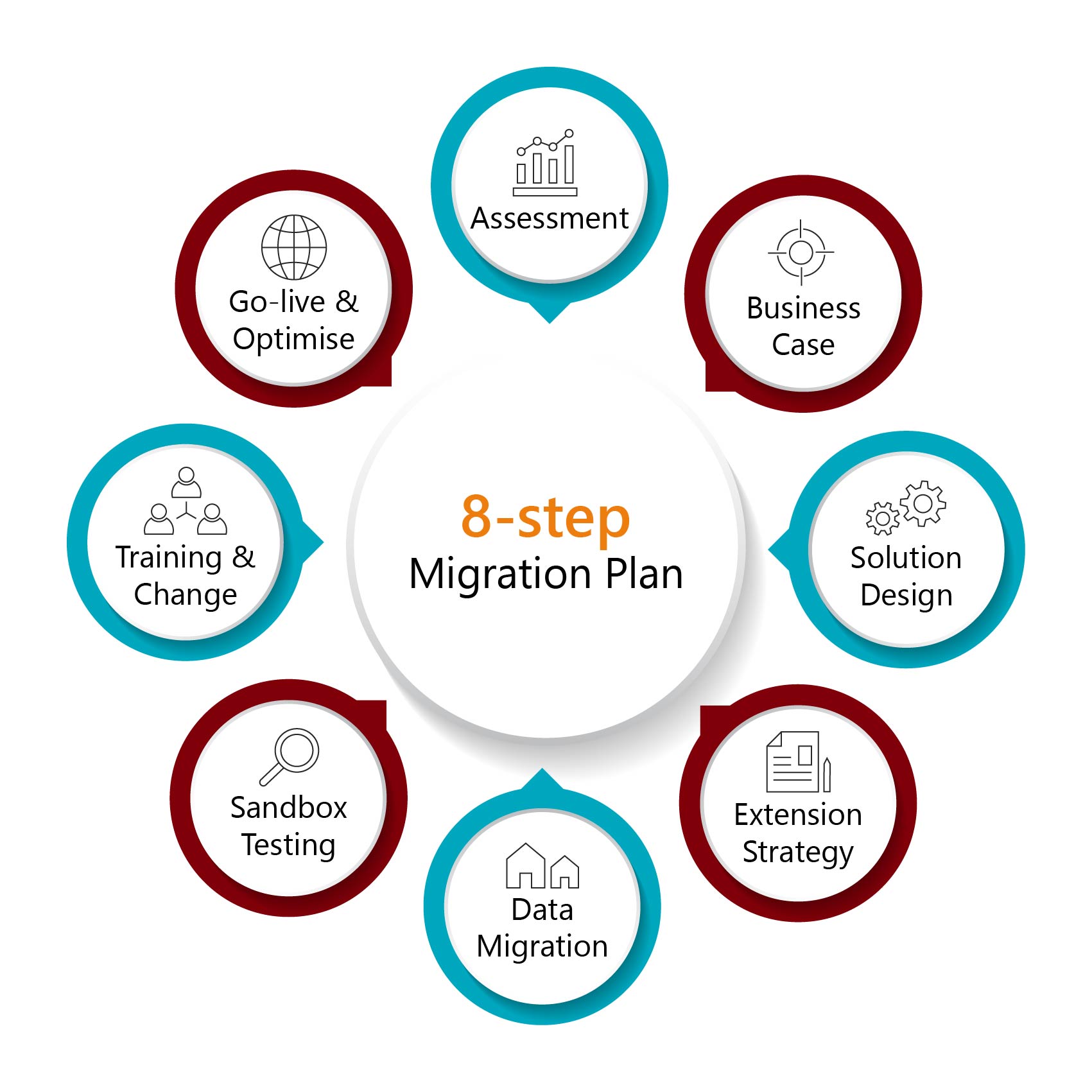
- Assessment
- Business case
- Solution design
- Extension strategy
- Data migration
- Sandbox testing
- Training and change
- Go-live and optimise
How Mercurius IT helps UK organisations succeed
- UK-specific compliance and localisation
- Low-risk migration
- Adoption and value
Frequently asked questions
Is Dynamics 365 Business Central the replacement for Dynamics NAV?
Yes. Business Central is Microsoft’s modern successor to NAV, delivering cloud and on-premises options, continuous updates, richer reporting, and tighter Microsoft 365 integration.
Is Dynamics NAV still supported in 2026?
It depends on your version. NAV 2018 left mainstream support in 2023 and only receives limited extended support and security fixes until 2028.
Do we have to move straight to the cloud with Business Central?
No. Business Central runs online or on-premises, so you can upgrade from NAV in stages and choose cloud when timing and budget align.
Does Business Central support Making Tax Digital and electronic VAT submissions?
Yes. It includes dedicated MTD VAT features, digital record-keeping, fraud-prevention headers, and direct API submission to HMRC through guided setup.
How often does Business Central update, and can we control it?
Microsoft releases two major updates yearly plus monthly fixes. You can define update windows per environment to protect month-end and peak periods.
How long does a typical NAV to Business Central upgrade take?
Most projects take 8–16 weeks, depending on customisations, integrations, and data. A structured assessment confirms timeline, risk, and business readiness.
Will we lose our NAV customisations and historical data?
No. Critical NAV logic is rebuilt as extensions, required historical data is migrated, and the rest archived securely for audit and analysis.
Why choose Mercurius IT as our NAV to Business Central partner?
We specialise in Dynamics, follow proven NAV upgrade frameworks, minimise downtime, align licensing and roadmap, and provide ongoing support beyond go-live.
Final thoughts
Staying on NAV in 2025 means accepting rising support risk, slower innovation and more effort to maintain compliance. Business Central offers an AI-ready, UK-compliant platform with predictable updates, modern integration and clear pricing.
Align your move with Microsoft’s release waves, migrate on your terms and give your teams tools that keep pace with your ambitions.
Ready to plan your move?
Book a conversation with the Mercurius IT team to review your NAV estate, map the upgrade path and build a practical plan for Business Central that fits your financial year and UK compliance calendar.