
Quick Summary
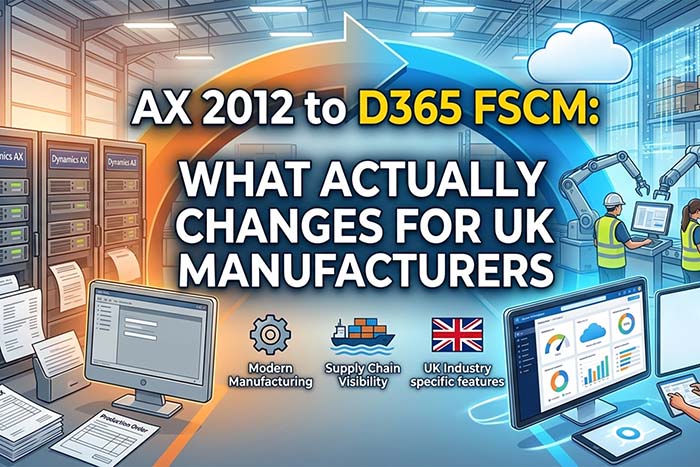
Migrating from AX 2012 to D365 FSCM enables real-time, compliance-ready, and AI-driven operations, significantly improving planning, finance, and quality processes for UK manufacturers.
Key Takeaways
- D365 FSCM changes how planning, compliance, and decision-making operate in real time.
- With Planning Optimisation and instant CTP, decisions move closer to sales and operations.
- UK compliance now depends on system readiness. MTD VAT and upcoming Income Tax changes require active configuration, not manual workarounds.
- Quality is fully digitised and audit-ready with features like EBR and CAPA that make compliance traceable, structured, and system-driven.
- Practical AI gains come from targeted use cases like procurement automation, demand insights, and predictive maintenance.
Most organisations have heard promises like cloud-first strategies, regular updates, and being ready for the future.
However, for those managing manufacturing operations, including shop floors, supplier contracts, production schedules, and HMRC compliance, the main concern is more specific: what has changed, and how do these changes impact operational processes?
With AX 2012, companies set it up, made it stable, and then left it alone. D365 FSCM is different. Microsoft now rolls out two major updates each year, called Wave 1 (April to September) and Wave 2 (October to March), plus monthly updates. These changes affect planning, quality management, procurement, finance, and UK compliance, even if your team is not monitoring them.
This represents a significant shift that many business leaders may overlook. The transition is not merely a platform migration; it fundamentally alters the organization’s relationship with its ERP system.
In this blog, we’ll look at the key changes in Dynamics 365 Finance & Supply Chain Management that matter most for UK manufacturers, such as updates to production planning, VAT returns, and quality audit trails. All these changes are current and have a direct effect on today’s business operations.
Why should I upgrade from AX 2012 to Dynamics 365?
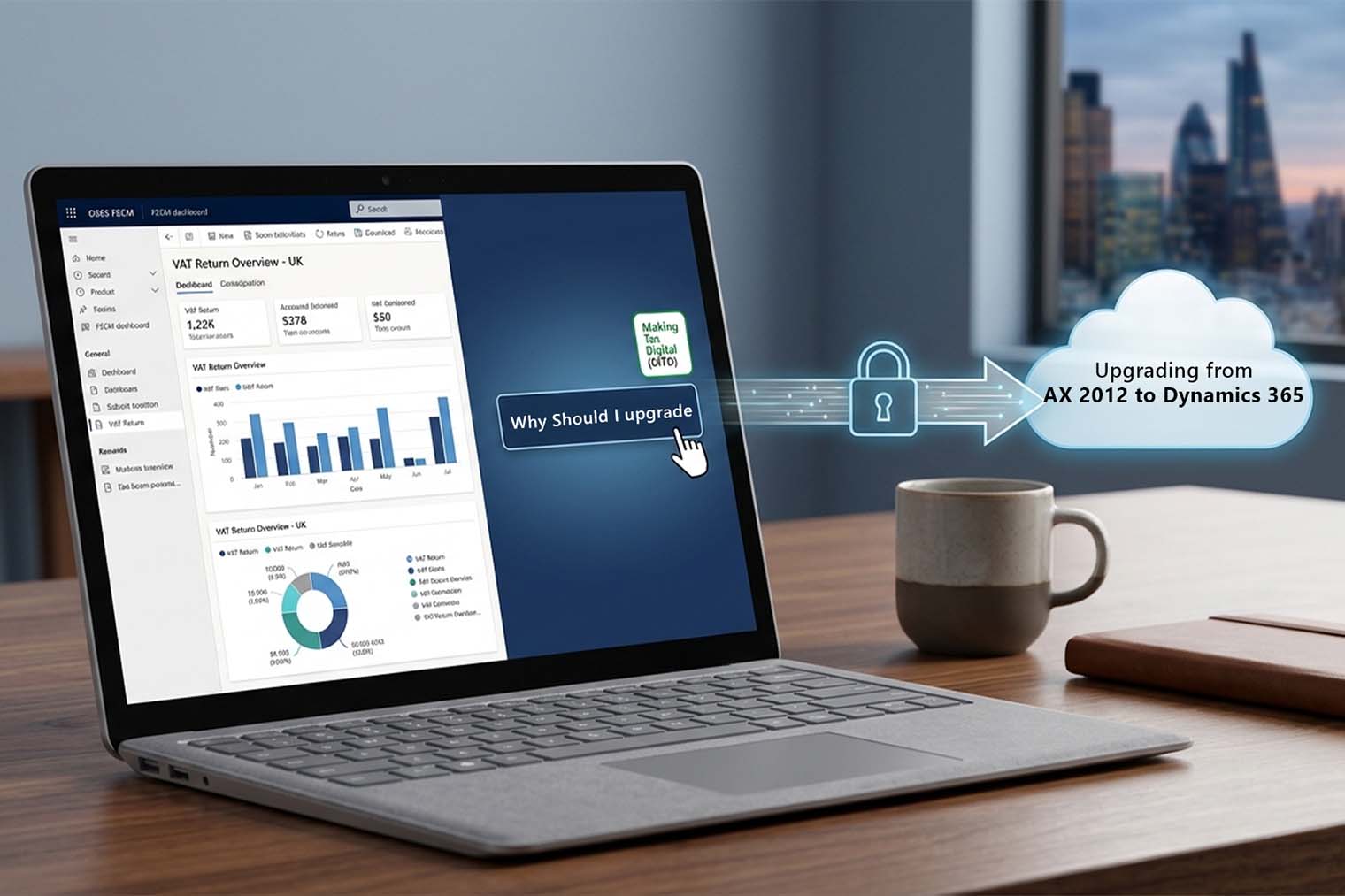
UK manufacturers are not speeding up ERP upgrades because of new technology trends. Instead, they are reacting to structural pressures that AX 2012 was never built to manage.
First, consider the timeline. Mainstream support for AX 2012 ended in 2018, and extended support will soon end as well. This leads to higher security risks, fewer updates, and more reliance on expensive workarounds.
At the same time, UK regulatory expectations have changed a lot. From VAT digital reporting to stricter audit and compliance rules, old systems are making finance teams rely on manual processes. This adds risk in areas where accuracy is now essential.
From an operations perspective, post-Brexit supply chains now require real-time visibility. Static planning and delayed data, which are common with AX 2012, are no longer enough in a world shaped by disruption, volatility, and complex cross-border trade.
There is also a workforce challenge. Ongoing labour shortages are pushing manufacturers to use more automation and AI-driven decision-making, but these solutions do not scale well on old ERP systems.
For business leaders, it’s a response to fundamental changes in how manufacturing businesses must operate to stay competitive.
Your AX 2012 system is holding back operational agility
Identify the exact gaps and build a roadmap to D365 FSCM transformation
AX 2012 vs D365 FSCM: Here is the Reality Check for You
This is where most ERP conversations go wrong. Moving from AX 2012 to D365 FSCM is often positioned as an upgrade, but in reality, it’s a fundamental shift in how your business operates, governs data, and makes decisions. Here’s what actually changes:
|
Area |
AX 2012 |
D365 FSCM |
What It Means for UK Manufacturers |
|
Deployment |
On-premises |
Cloud (Azure) |
Lower infrastructure burden, but requires strong governance, security, and access control policies |
|
Updates |
Manual, infrequent |
Continuous, automatic |
No more “upgrade cycles”, but change management and user readiness become ongoing responsibilities |
|
Data |
Siloed across modules |
Unified data platform |
Enables real-time visibility across finance, supply chain, and operations |
|
Analytics |
Limited, external tools |
Embedded Power BI & AI |
Shifts from reporting to predictive, insight-driven decision-making |
|
Compliance |
Custom-built, reactive |
Built-in regulatory capabilities |
Simplifies UK VAT, audit, and reporting compliance with less manual intervention |
Looking to dive deeper into the key differences? Read our complete differences blog here – From AX to Dynamics 365 FSCM: A Modern Transformation Path for Manufacturers
What Has Changed in Dynamics 365 FSCM that UK Manufacturers Should Notice
Planning in D365 FSCM has evolved from a backend, batch-driven process, as seen in AX 2012, to a real-time, intelligence-led system directly linked to business outcomes. For UK manufacturers, this enables faster demand response, more accurate customer commitments, and improved supply management, even in unpredictable conditions.
- Planning Optimisation is now the default
The legacy Master Planning engine is being phased out. Transitioning to Planning Optimization is required and delivers faster, in-memory planning with fewer delays, though teams must adapt to new logic and processes. - Capable-to-Promise (CTP) in real time
CTP calculations are now instantaneous, eliminating the need to wait for a full MRP run. Sales teams can commit to accurate delivery dates at order entry, enhancing customer trust and reducing overpromising. - Expanded support for complex manufacturing scenarios
Planning Optimization now supports lean manufacturing, catch weight, and step consumption, making it suitable for industries such as food processing, chemicals, and process manufacturing where traditional MRP was less effective. - Demand Planning is a new, standalone capability
Advanced AI features enable automated forecasting, seasonality detection, and integration of external signals. This shifts planning from reactive spreadsheets to predictive, data-driven decision-making. - Stronger collaboration between planning and sales
Teams can now collaborate on the same master plan in real time, reducing delays and improving alignment between demand signals and supply execution.
If these capabilities are not actively used, the full value of D365 FSCM is not realised. Operating with legacy planning practices limits the benefits of the modern system.
UK Compliance Updates in D365 FSCM: Key Changes for Manufacturers
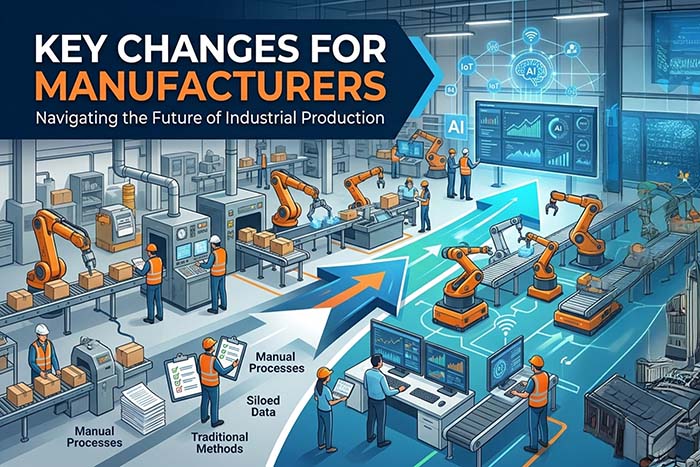
For UK manufacturers, compliance has become a system-level dependency that directly affects financial operations. The transition from AX 2012 to D365 FSCM requires stricter alignment with HMRC’s digital frameworks, and recent updates mandate changes that finance leaders must validate.
Making Tax Digital (MTD) VAT – Security Update (June 2025)
Microsoft has updated D365 Finance’s integration with HMRC for VAT submissions by introducing an Electronic Invoicing intermediary for secure credential management. Starting June 6, 2025, batch-mode VAT submissions will no longer be supported, and on-premises access to these services will be discontinued.
If your finance team relied on batch submissions, that workflow is now obsolete. Submissions may fail without notification unless the new process is configured.
Ensure the “Security enhancements in UK MTD VAT integration” feature is enabled in Feature Management and confirm that VAT submissions are processed through the updated method.
MTD for Income Tax – Effective April 2026
HMRC is extending MTD to Income Tax, requiring quarterly digital submissions for individuals earning above £50,000, including self-employed professionals and landlords. Non-compliance will trigger points-based penalties.
Although this is not a direct D365 feature change, it creates a compliance dependency on how financial data is captured, structured, and reported digitally, particularly for manufacturers with director-shareholders or hybrid income structures.
Ensure your finance team is prepared for more frequent, digitally aligned reporting, and assess whether your current data processes can support this change.
Your compliance setup may already be outdated
Validate your MTD, VAT, and reporting readiness before it impacts your business
D365 FSCM Quality Management Changes Every Regulated Manufacturer Must Know
Quality in D365 FSCM has evolved from a reactive control point to a fully integrated, audit-ready system embedded throughout the production lifecycle. For UK manufacturers subject to ISO, BRC, or sector-specific regulations, this change directly enhances traceability, compliance readiness, and audit outcomes.
- Electronic Batch Records (EBR)- Electronic Batch Records transform how production and quality data are captured. Each step, including materials used, operator actions, inspection results, and equipment data, is automatically logged and time-stamped against the product lot.
- Corrective and Preventive Actions (CAPA) – Quality issues now trigger structured CAPA workflows in D365, linking non-conformances to root cause analysis and resolution.
- Supplier Quality Scoring- Supplier performance is now measured using inspection results, defect rates, and non-conformance history, which contribute to a transparent scoring model.
- Activation Matters- Advanced Quality Management is available from version 10.0.44 onward, but must be enabled through Feature Management.
AI and Copilot in Dynamics 365 FSCM What is Actually Usable for UK Manufacturers Right Now
AI in D365 FSCM has moved beyond future planning, though it is not yet widely implemented. UK manufacturers should focus on identifying which features are available now and where AI can provide immediate operational benefits.
- Supplier Communications Agent – Practical Automation in Procurement
This is a practical AI application available today. These AI agents monitor supplier emails, detect purchase order changes, and automatically draft or apply updates without the need for formal EDI setups. - Copilot in Demand Planning – Manufacturers can use natural language to identify forecast anomalies, understand demand patterns, and generate insights instantly, eliminating the need to build reports.
- Predictive Maintenance – Microsoft Copilot analyses equipment and sensor data to detect early signs of failure, allowing planned interventions before breakdowns occur.
- Natural Language ERP Interaction – Users can interact with the system through simple commands rather than navigating complex menus.
AI in D365 FSCM is already driving efficiency. However, to leverage it fully, it requires selective, use-case-driven adoption. And in identifying these high-impact use cases, a reliable Microsoft Solutions partner like Mercurius IT can help.
Bottom Line
The changes discussed in this blog, such as MTD compliance updates, quality management rebuilds, planning engine migrations, AI-assisted procurement, and ESG reporting, are already available on the platform and ready to be activated and configured.
Manufacturers who gain the most value from D365 FSCM treat release waves as business events rather than IT events. They maintain ongoing discussions with their implementation partners about changes and their operational impact.
How can Mercurius IT help you with the upgrade?
With experience as an implementation and support partner for over 350 global businesses and a team of more than 150 technical consultants, Mercurius IT has the expertise to help organisations eliminate system complexities and redundancies.
With over 21 years of experience collaborating with Microsoft, Mercurius IT follows a certified methodology that ensures a 99% success rate in Microsoft FSCM implementations across industries. The company is committed to optimising business operations and enhancing revenue streams with minimal effort on the part of clients.
Choose a partner who understands deep insights of manufacturing
With 20+ years of Microsoft expertise, Mercurius IT delivers industry-specific ERP success
Frequently Asked Questions
What changes when moving from AX 2012 to D365 FSCM?
The transition entails shifting from a static, on-premise enterprise resource planning (ERP) system to a cloud-based platform that evolves continuously and provides real-time planning, integrated compliance capabilities, and AI-driven insights.
Why are UK manufacturers moving away from AX 2012 now?
The discontinuation of support, escalating Making Tax Digital (MTD) compliance requirements, and the demand for real-time supply chain visibility are rendering legacy systems unsustainable.
How does D365 FSCM improve planning compared to AX 2012?
D365 FSCM replaces batch-based Material Requirements Planning (MRP) with Planning Optimisation and real-time Capable-to-Promise functionality, facilitating faster and more accurate production and delivery decisions.
Is D365 FSCM suitable for regulated manufacturing industries?
D365 FSCM, featuring Electronic Batch Records, Corrective and Preventive Action (CAPA) workflows, and comprehensive traceability, substantially improves audit readiness for regulated industries including pharmaceuticals, food, and chemicals.