
Quick Summary
Cold storage logistics presents unique operational challenges that directly impact inventory accuracy, product quality, regulatory compliance and profitability. This guide explores five common challenges faced by 3PL cold storage providers and explains how the right warehouse management technology can improve traceability, temperature control, warehouse efficiency and overall supply chain performance.
Key Takeaways
- Energy consumption and temperature management significantly impact cold storage operating costs.
- Product traceability and batch tracking are essential for compliance and inventory control.
- Multiple temperature zones require accurate warehouse processes and system automation.
- Cold storage operations benefit from specialised barcode scanning and warehouse technology.
- An integrated Cold Storage Warehouse Management System helps improve visibility, compliance and operational efficiency.
Third-Party Logistics (3PL) cold storage warehouses are faced with a selection of unique challenges as compared to other standard warehouses. 3PL cold storage operations are very complex and often result in significantly higher operating costs compared to other sectors. It needs to plan and execute overall business operations strategically to maintain profitability. Key factors such as utility cost, labour cost and government regulations for handling perishable food products; impact the overall profit margins and introduces complexity in business operations.
Power Consumption
With a 24-hour operating facility, cold storage warehouses consume an enormous amount of electricity. As the warehouse square-footage increases, the total power consumption does too. Since the cost of energy is consistently increasing, the biggest challenge for cold storage warehouse providers is to keep power consumption costs as low as possible.
Investing in various energy efficiency improvement programs and the latest technology for refrigeration temperature control would help in the long term to keep power consumption costs lower.
Not only do 3PL cold storage facilities deal with the cost of powering the warehouse, but also incurs an additional fuel cost during transportation. Efficient logistics and transportation planning can help to keep fuel consumption economical.

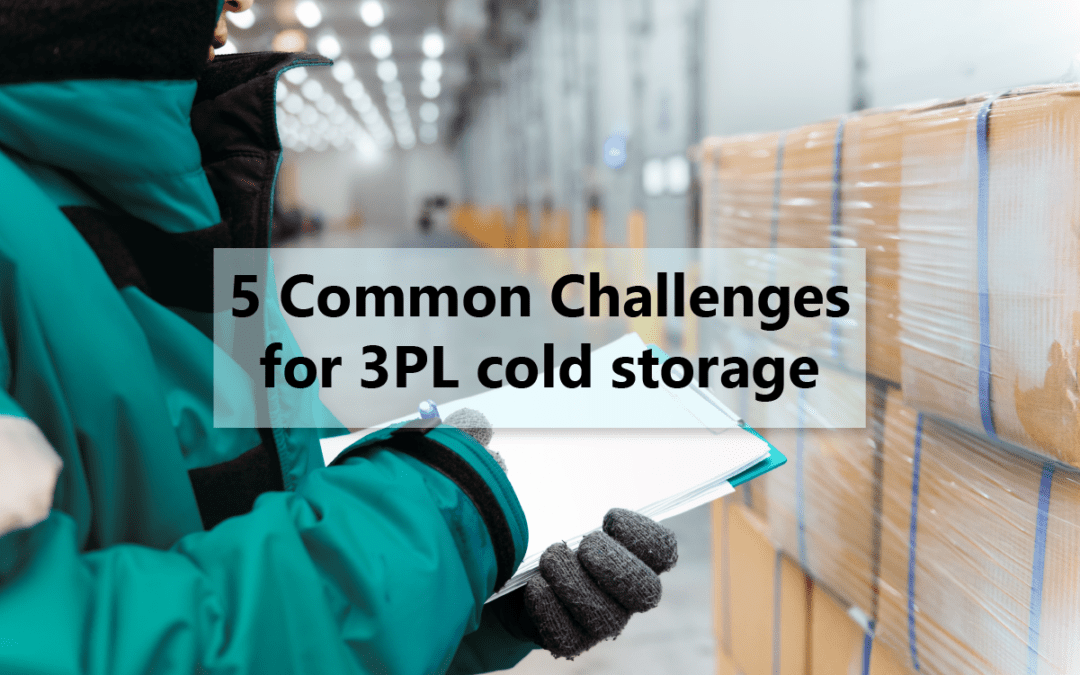
Cold storage facilities should work towards lowering their power consumption costs by investing in energy improvement programs
Cold storage warehouses must adopt freezer-grade barcode and labelling solutions, which will sustain even in a freezing environment.
Cold Storage Specific Solutions
Barcodes and labels play an important role in warehouse operations. They help warehouse workers correctly identify bin location, pallets, and products. Conventional barcodes and labels with general purpose adhesive are designed to stick to the surface at room temperature. These will not last long in the cold temperatures in the warehouse and they can easily peel off. This can lead to workers being unable to identify the correct bin locations/pallets, causing an inefficient inventory management process.
Cold storage warehouses must adopt freezer-grade barcode and labelling solutions, which will sustain even in a freezing environment. This would make sure that every rack, bin location and pallet do have a correct label identifier and workers can perform warehouse activities efficiently within a cold storage environment.
Another technology challenge for cold storage warehouses is that not all scanners will give the required performance levels in a freezing environment. Some conventional batteries will not last long in cold temperatures. Companies must adopt a technology that is specifically designed to withstand and operate under cold and freezing temperatures.
Product Traceability
Product traceability is a very critical part of cold storage warehouse operations. Every pallet needs to be traced for its expiry date, freezing date, freezing temperature and supplier’s batch no. Every country or region has its own rules and regulations related to food processing and food storage, which companies must follow. Occasionally, customers also have a unique requirement that 3PL companies need to follow to ensure customer satisfaction.
Cold storage WMS should be capable enough to provide inventory traceability across all the inventory transactions and notify employees in advance about any inventory that is close to expiry. Also, it must be capable enough to quickly adapt to any dynamic change in business process based on specific customer requirements.

Cold storage WMS should be capable enough to provide inventory traceability feature across all the inventory transactions and notify in advance about the expired inventory.

Offering a cold storage facility for various types of products is always good, but then it also creates a need to have different storage zones to be operated at different temperature ranges depending on the type of product category.
Different Types of Temperature Zones for Various Product Categories
In a cold storage warehouse, various types of products are stored, requiring different temperature ranges to be maintained to prevent spoilage and wastage. Offering a cold storage facility for various types of products is always good in terms of building a large customer base, but it also creates a need to have various storage zones that operate at different temperature ranges, depending on the type of product category.
This brings in operational complexity when storage space needs to be scaled up or down, depending on the expected inventory storage demand. In conventional warehouses, you can easily decide to move inventory from one zone to another, since there is no product-specific temperature requirement. Additionally, system processes need to be configured to handle various business scenarios based on the type of product, e.g., put-away products to specific temperature zone, configure the inbound process to capture product specific information or validations, etc.
Spoilages
Regulating temperature and humidity across multiple product category-specific storage zones is a challenging task, which has a direct impact on product life. For multi-commodity cold storage facilities, it’s a common challenge to maintain product-specific temperature and humidity levels.
Traditional temperature monitoring system is dependent on the skills and experience of the operator. An operator must be present on-site to adjust and manage the temperature control system. With RFID temperature sensor-based solutions, it is possible to monitor the storage zone temperature from anywhere and it also helps to monitor other parameters like humidity, gas leaks, etc.

For multi-commodity cold storage facilities, it’s a common challenge to maintain product-specific temperature and humidity levels.
Facing similar cold storage challenges?

Boltrics 3PL Dynamics, the software standard for cold storage logistics
Boltrics 3PL Dynamics is a complete software solution specifically for cold storage logistics. All business and logistics processes are integrated into the software standard. To control and manage the temperature, registration of batch numbers, production, and expiry date information. Also, for purchasing, sales, and finance. Integrated and customised.
Frequently Asked Questions
How can 3PL providers reduce product spoilage in cold storage warehouses?
Product spoilage can be reduced by implementing a Cold Storage Warehouse Management System that supports real-time inventory visibility, temperature monitoring, batch and expiry tracking, and FEFO (First Expired, First Out) inventory management. These capabilities help ensure products are stored, rotated, and dispatched correctly while maintaining compliance throughout the cold chain.
What features should a Cold Storage Warehouse Management System include?
A Cold Storage Warehouse Management System should include temperature-controlled zone management, batch and expiry tracking, FEFO inventory management, barcode or RF scanning, real-time inventory visibility, quality control, traceability, reporting, and seamless integration with ERP and transport management systems to optimise cold chain operations.
How does warehouse software improve product traceability?
Warehouse software improves traceability by recording every inventory movement, tracking batch and lot numbers, monitoring expiry dates, and maintaining a complete audit trail. This enables faster product recalls, supports regulatory compliance, and provides complete visibility across the supply chain.
Can a Cold Storage WMS support multiple temperature zones?
Yes. A modern Cold Storage Warehouse Management System can manage multiple temperature-controlled zones within the same facility, ensuring products are stored according to their specific requirements while maintaining inventory accuracy and operational efficiency.
How can technology reduce energy costs in cold storage operations?
Technology helps reduce energy costs by improving warehouse layout, optimising inventory movements, reducing unnecessary door openings, automating warehouse processes, and providing better visibility into storage utilisation. Efficient warehouse operations minimise energy consumption while maintaining product quality.
Is Microsoft Dynamics 365 suitable for cold storage logistics?
Yes. Microsoft Dynamics 365 Business Central, combined with a specialised Cold Storage Warehouse Management System, provides an integrated platform for inventory management, warehouse operations, transport, finance, and customer management, making it well suited for temperature-controlled logistics operations.
How do 3PL providers improve inventory accuracy in cold storage?
Inventory accuracy is improved through barcode scanning, automated inventory updates, batch and expiry tracking, cycle counting, and real-time warehouse visibility. These capabilities reduce manual errors and provide accurate stock information across all cold storage operations.
What should businesses consider when selecting cold storage warehouse software?
Businesses should look for features such as temperature-controlled inventory management, batch and expiry tracking, FEFO support, real-time visibility, ERP integration, warehouse automation, compliance reporting, scalability, and support for multi-client warehouse operations.
Ready to optimise your cold storage operations?
Related Insights
Maximising Efficiency in Transport Operations: The Synergy Between Human Expertise and Advanced TMS
A powerful transport management system allows you to carry out activities in the best possible way. In doing so, a TMS will help optimally set routes, compare prices with external carriers, and share information automatically with your customers. However, as much as...

Managing Fuel Price Fluctuations: A Strategy for Protecting Your Margins
Fuel prices are notoriously unpredictable, posing a significant challenge to businesses with tight profit margins. How can you ensure these volatile costs don't erode your profits or leave your pricing outdated? Boltrics offers a solution with its Advanced Fuel Clause...
The Impact of Warehouse Management Systems on Supply Chain Efficiency
Warehouse Management Systems (WMS) revolutionize supply chain efficiency, optimizing inventory management and enhancing operational productivity. Before diving into the details of Warehouse Management Systems (WMS), take a moment to observe your surroundings....
