
Quick Summary
Microsoft Copilot ROI becomes measurable when organisations establish baseline metrics before deployment and after rollout. Businesses that define clear success criteria, focus on high-value use cases, and drive user adoption are more likely to achieve faster payback periods, stronger productivity gains, and sustainable returns from their AI investment.
Key Takeaways
- Baseline metrics are essential to accurately measure Copilot ROI after deployment.
- User adoption drives ROI; low usage limits productivity and business outcomes.
- Most organisations see fastest gains in finance, HR, legal, and operations teams.
- Structured rollout and governance deliver stronger ROI than technology alone.
Half of technology leaders still cannot confidently say whether Microsoft Copilot is delivering a return on investment and it’s costing them.
In fact, according to a CNBC Technology Executive Council survey conducted in late 2024, 50% of technology executives said it was still too soon to know whether Microsoft Copilot justified its cost, while those who had formed an opinion were split almost evenly between positive and negative outcomes. Drawing on our experience implementing Copilot for mid-market businesses across the UK, Mercurius IT has found that the biggest challenge is rarely the technology itself. It is proving the business case.
While the principles of AI ROI measurement apply broadly, this blog focuses specifically on Microsoft Copilot as the most widely deployed AI productivity tool in the UK mid-market. Organisations that establish clear success metrics before deployment are far more likely to demonstrate measurable returns than those who focus only on licensing and rollout.
This blog explores the exact metrics UK business leaders should track before and after deployment to build a credible, boardroom-ready business case.
Why Most Copilot Deployments Struggle to Show ROI
Many organisations are still asking the same question: Is Copilot delivering measurable business value?
The answer often depends less on the technology and more on how it’s implemented. While many businesses are exploring AI, not all have moved beyond pilot programmes or achieved organisation-wide adoption. Without consistent user engagement, it’s difficult to realise meaningful productivity gains or demonstrate a clear return on investment.
A common mistake is deploying Microsoft 365 Copilot without defining what success looks like. If baseline metrics for productivity, customer service, or operational efficiency aren’t established before rollout, measuring business impact becomes challenging.
The organisations seeing the strongest results treat Copilot as a strategic business transformation initiative rather than just another software deployment. They set clear objectives, encourage user adoption, and continuously measure outcomes against business goals.
What Good ROI Actually Looks Like for UK Mid-Market Businesses

Before tracking metrics, it helps to understand what realistic returns look like for UK mid-market organisations.
Forrester’s research found that SMBs achieved projected returns ranging from 132% to 353% over three years, with outcomes heavily influenced by implementation quality and the depth of use cases adopted.
For commercial teams using Dynamics 365 CRM, those productivity gains extend directly into pipeline management and proposal output, which is an advantage for businesses already running on Microsoft’s platform.
The GBP Reality Check!!
Microsoft Copilot pricing varies depending on the plan, licensing model and whether the organisation is purchasing Copilot as part of a broader Microsoft 365 strategy. Copilot users save an average of 26 minutes per day, which translates to roughly £2,375 in annual productivity value per user against a £300–£360 annual licence cost. For a 200-user deployment, leaders should calculate not only the licence cost, but also the Year 1 costs of readiness, governance, training, change management and adoption support.
The organisations achieving the strongest returns are typically those with structured adoption plans, clear objectives, and a roadmap tied directly to business outcomes.
The Metrics to Establish Before You Deploy Copilot
Before you measure ROI, you need a baseline. You can think of this as your pre-deployment scorecard. If you don’t know where you started, it’s impossible to prove how far you’ve progressed.
1. Productivity Baselines
Start by measuring how much time employees currently spend on routine knowledge work, including email management, meeting notes, document drafting, and report creation. This can be tracked through self-reported time logs or Microsoft Viva Insights.
2. Operational Cost Indicators
Identify how many staff hours are spent on repetitive administrative tasks across departments. Also, review the number of tools currently being used for activities such as content creation, note-taking, or knowledge management.
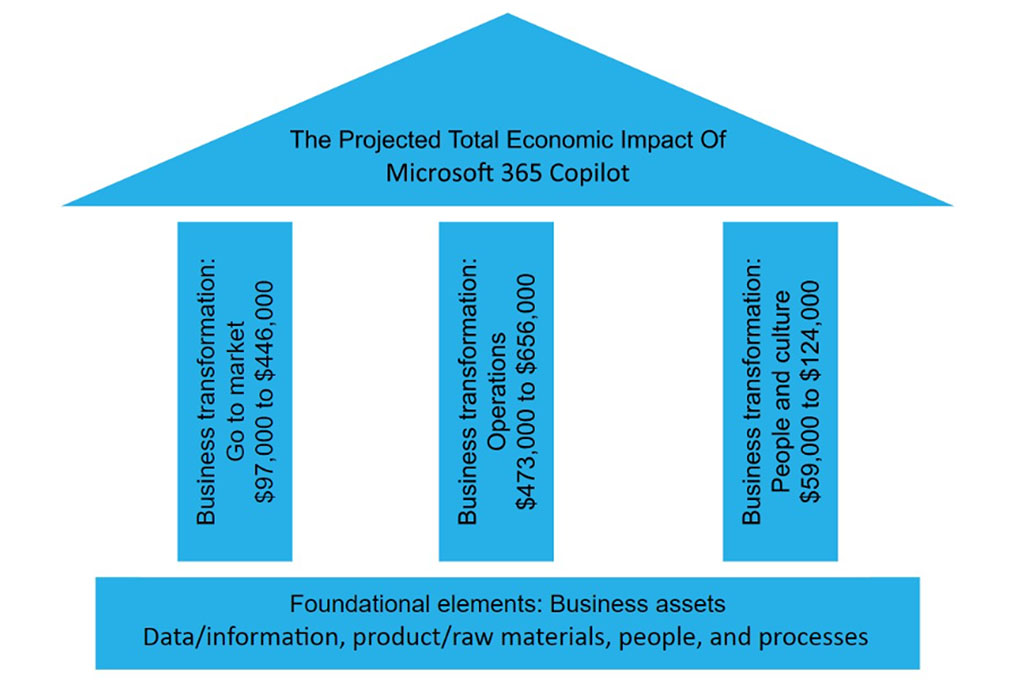
Many organisations find that Copilot helps streamline these activities and reduce tool sprawl. In fact, businesses using Copilot reported or expected operating cost reductions of up to 20%.
For organisations running Microsoft Dynamics 365 Business Central, this baseline is especially easy to establish. Even task durations in finance and operations workflows can be measured directly inside the platform before rollout begins.
3. Revenue-Side Indicators
For commercial teams, track your current sales cycle length, proposal output, and win rates before deployment.
These metrics create a clear link between AI adoption and revenue performance. Organisations in Forrester’s study anticipated a 16 to 20% reduction in time-to-market after adopting Copilot.
4. Employee Experience Baseline
Establish a baseline for employee engagement scores, task satisfaction, and perceptions of workload. If Copilot reduces administrative burden and frees employees to focus on higher-value work, that improvement should be visible in your people metrics.
For HR teams, Copilot’s impact on HR processes is one of the fastest areas to show measurable change, making this baseline particularly worth capturing before rollout.
The organisations that achieve the strongest ROI define success up front and track the metrics that matter from day one.
The Metrics to Track After Deployment
After Copilot is deployed, shift focus from expectations to measurable results.
1. Time Saved Per User
Start by measuring time savings at 30, 60, and 90 days after rollout. Compare current performance against your pre-deployment benchmarks for tasks such as email management, meeting preparation, and document creation.
A UK government trial found that Copilot users saved an average of 26 minutes per day, with 82% saying they would not want to return to their previous way of working. However, the impact varied by role and task type, and complex, nuanced or data-heavy work still required careful human review.
2. Adoption Rate by Department
Adoption is one of the clearest indicators of success. A target of 60% or higher active usage within the first 90 days is a strong benchmark.
Use the Copilot Dashboard in Microsoft Viva Insights to monitor team engagement. Low adoption typically results from training gaps, change management challenges, or unclear use cases, rather than technology limitations.
3. Financial Impact
This is the metric every CFO cares about. Calculate the value of time saved using this formula:
| Hours saved × Average hourly rate × Headcount = Productivity value |
For a UK organisation with 200 employees, Microsoft Copilot can represent an annual investment of approximately £60,000–£72,000 based on current licensing costs.
|
For instance, a UK business of 200 employees Against a licensing cost of £60,000–£72,000/year, that is a ~5x return on the licence cost alone. |
Note: This calculation covers the licence cost only. When full Year 1 implementation costs are included (£55–£67 per user), the return is still strongly positive.
The results can be significant when rollout is structured correctly. UK Power Networks reported a 480% ROI and 96% adoption rate. They took a phased, use-case-led approach to Copilot deployment, focused on targeted user training and business-specific scenarios. It is among the strongest reported outcomes for a UK organisation of its scale. The difference was not budget; it was methodology.
4. Revenue & Pipeline Performance
For commercial teams using Dynamics 365 CRM, track proposal output, sales cycle length, and win rates against your baseline metrics.
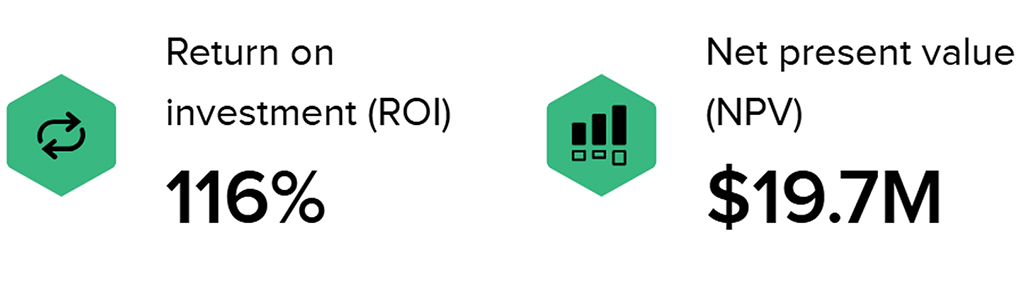
These indicators help connect Copilot directly to revenue generation. Forrester’s 2025 study found organisations achieved an 116% ROI over three years, demonstrating that the value of AI extends beyond productivity gains to measurable business growth.
5. Data Governance and Security
One metric often overlooked: permissions hygiene. Copilot surfaces information a user is technically permitted to access within Microsoft 365, which means pre-deployment data governance matters. UK organisations with GDPR and ICO obligations should audit SharePoint permissions and sensitivity labels before rollout. As a Microsoft Solutions Partner, Mercurius IT routinely includes a governance readiness review as part of the Copilot implementation process to ensure this is addressed before deployment, not after.
Ready to Build a Stronger Business Case for Microsoft Copilot?
If you’re evaluating Copilot to get greater value from an existing deployment, our team can help you define the right metrics, create a ROI framework, and develop an adoption strategy tailored to your organisation’s goals.
Three Common Measurement Mistakes Leaders Make
Even organisations with the right technology can struggle to demonstrate ROI if they measure success incorrectly. Here are three mistakes to avoid:
1. Measuring Too Early
Many leaders expect clear ROI signals within the first few weeks. In reality, most meaningful ROI indicators begin to stabilise between months three and six, making 30-day assessments unreliable benchmarks.
2. Measuring the Wrong People
Early adopters are often your most enthusiastic users, but they rarely represent the wider workforce. To get an accurate picture, measure outcomes across different departments, job roles, and levels of digital maturity.
3. Ignoring Adoption Rates
ROI and adoption go hand in hand. A strong ROI model on paper means very little if only a small percentage of licensed users are actively using Copilot.
Set specific, measurable targets before deployment. For example, reducing report creation time by 40% is far easier to measure than improving productivity broadly. Then review progress at regular weekly, monthly, and quarterly intervals.
These are precisely the gaps a structured implementation partner closes before they become expensive problems, which is why the methodology matters as much as the technology.
Ready to Build a Stronger Business Case for Microsoft Copilot?
If you’re evaluating Copilot or looking to get greater value from an existing deployment, Mercurius IT can help you define the right metrics, build a ROI framework, and develop an adoption strategy tailored to your goals.
Bottom Line
The success of Microsoft Copilot should be measured by the business outcomes you achieve. The businesses seeing the strongest returns in 2026 are not those with the largest AI budgets. They are the ones that established their baseline metrics before deployment, structured their rollout around specific use cases, and consistently measured adoption from week one. With strong adoption, targeted use cases and proper governance, many organisations can build a positive ROI case within the first 6–12 months.
Whether your objective is to improve productivity, reduce operational costs, accelerate sales performance through Dynamics 365, or enhance employee experience, the framework is the same: measure before you deploy, track adoption actively, and hold the investment accountable to real business goals.
Without that structure, AI remains an expense. With it, AI becomes a measurable business investment.
If you’re ready to build a stronger business case for Microsoft Copilot, speak with a Mercurius IT specialist and let’s identify the metrics that matter for your organisation
Frequently Asked Questions
How do you measure Microsoft Copilot ROI?
Microsoft Copilot ROI is measured by comparing business outcomes before and after deployment. Key metrics include time saved per user, adoption rates, productivity improvements, operational cost reductions, sales performance, and employee experience. Establishing baseline metrics before rollout is essential for accurately demonstrating ROI.
What is a good ROI for Microsoft Copilot?
A good Microsoft Copilot ROI varies by organisation, industry, and adoption levels. A Microsoft-commissioned Forrester Consulting study projected returns ranging from 132% to 353% over three years for SMBs, depending on adoption maturity, implementation quality and the depth of use cases adopted.
Many UK organisations achieve positive returns within 6–12 months when adoption is actively managed and high-value use cases are prioritised.