
Overview
Microsoft secures ERP AI data through a layered architecture that combines encryption, access control, governance, and compliance, ensuring enterprise data remains protected, private, and fully under organisational control.
Key Takeaways
- Digital transformation succeeds when strategy, operations, and technology are aligned through a structured roadmap.
- Microsoft Dynamics 365 connects data, processes, and teams for enterprise-wide visibility and smarter execution.
- A phased transformation approach reduces risk while delivering measurable business outcomes.
- Governance and change management are critical to ensuring transformation delivers lasting value.
- Real-time insights enable faster decisions and improved operational agility.
- The right implementation partner ensures Dynamics 365 drives outcomes beyond deployment.
Digital transformation is a top priority for leaders today. However, the current situation is surprising. Only 28% of UK businesses currently show strong digital health, while nearly 87% say they’ve faced challenges in implementing digital tools effectively.
Meanwhile, the need to adapt is growing. In fact, 83% of UK leaders now see AI and digital skills as key to staying competitive in the future.
In fact, many organisations are investing in new technologies, cloud platforms, and automation. But without a clear roadmap, transformation often becomes fragmented, expensive, and slow to deliver real business value.
And that is where the real challenges lie. The challenge lies in aligning vision, operations, and execution into a structured journey that drives outcomes. This is where platforms like Microsoft Dynamics 365 become more than just ERP or CRM systems. They start to serve as tools that enable real transformation.
Because true digital transformation doesn’t happen through tools alone.
It happens when you have a clear roadmap. In this blog, we will guide you through the Microsoft Dynamics 365 digital transformation roadmap to help you get started.
What Business Leaders Must Get Right Before Digital Transformation Begins?
Almost 70% of digital transformation projects do not meet expectations. This usually happens not because of technology problems, but because the organisation is not aligned. Common challenges businesses face include:
- Data locked in functional silos
- Continued reliance on legacy processes
- Disconnected customer and workforce systems
- Limited real-time decision visibility
- Resistance to change across teams
These barriers lead to transformation efforts that are scattered. Investments are made, but the overall impact on the business stays limited. Microsoft Dynamics 365 provides a single foundation for transformation. This lets you treat it as a company-wide journey instead of a set of separate projects.
This is why having a clear roadmap for digital transformation with Dynamics 365 is so important. A good roadmap should help you achieve:
- Clear alignment between strategy and execution
- Connected operations across departments
- A scalable digital foundation
- Measurable business outcomes
- The flexibility to adapt as markets evolve
Organisations that take this approach are 2.5 times more likely to see measurable returns on their digital investments.
The 5-Stage Digital Transformation Roadmap with Microsoft Dynamics 365
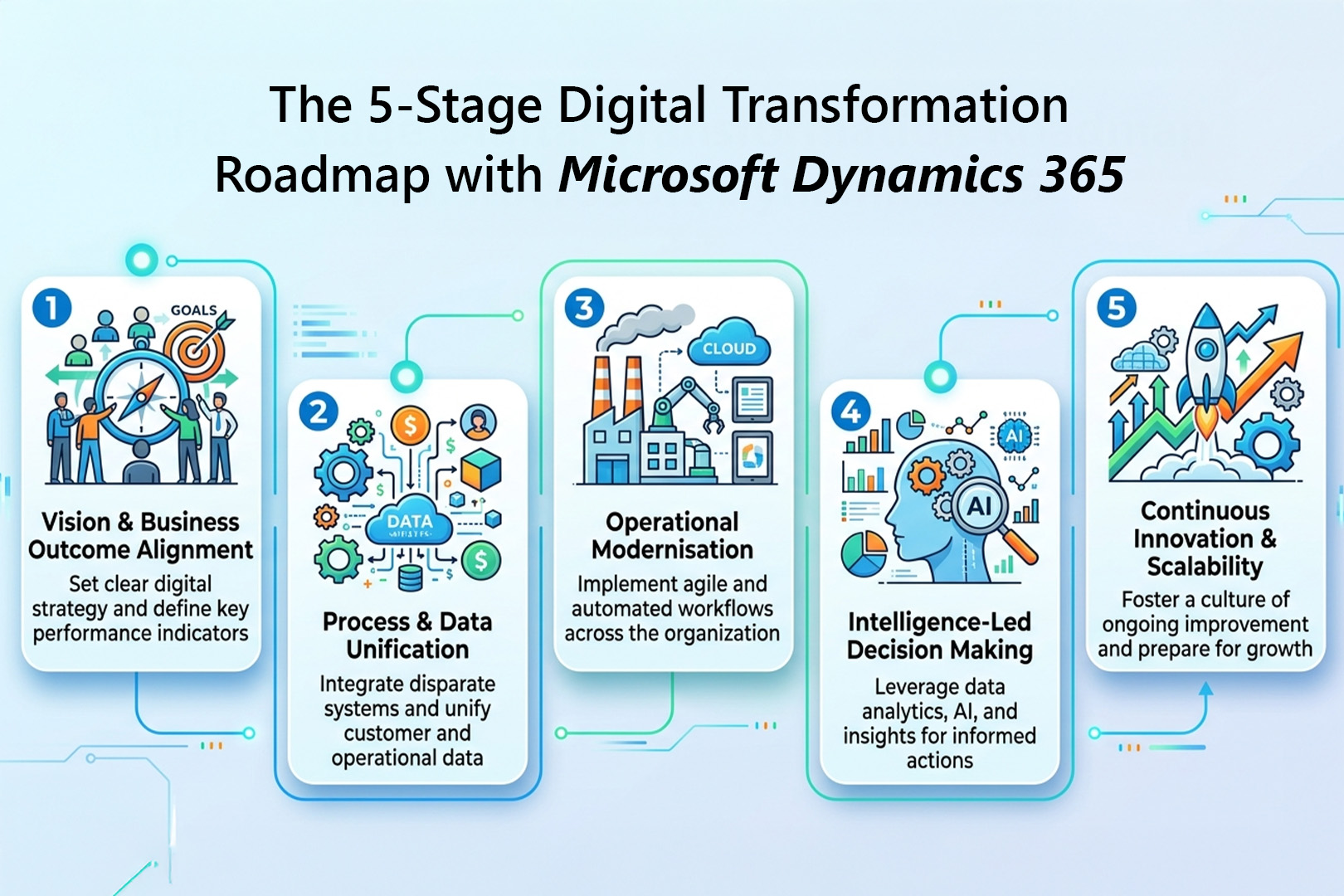
Stage 1: Vision & Business Outcome Alignment
At this stage, leaders decide what success means for their business.
Is the priority growth? Efficiency? Customer experience or Agility?
Rather than starting with technology, the focus is on finding the areas where the business needs the most change. This involves matching leadership goals to gaps in operations, such as:
- Finance visibility
- Workforce productivity
- Customer engagement
- Supply chain responsiveness
- Project delivery efficiency
Microsoft Dynamics 365 supports this by creating a unified business view, helping leaders see how different functions connect and where transformation will create the most impact.
Stage 2: Process & Data Unification
Many transformation efforts slow down when departments work separately. This stage is about bringing systems, data, and workflows together. The aim is to go from scattered information to one reliable source.
Leaders no longer have to wait for reports after making decisions. They get real-time insights that show what’s happening in the business right now. With its connected ERP and CRM tools, Microsoft Dynamics 365 helps break down barriers between teams and makes sure everyone uses the same data.
Stage 3: Operational Modernisation
After data and processes are in sync, the next step is to improve how work happens every day.
This includes:
- Automating manual workflows
- Standardising processes across teams
- Improving collaboration between functions
- Supporting remote and hybrid ways of working
Instead of using separate tools, Dynamics 365 uses AI to automate tasks. This reduces problems and helps the business work faster.
Stage 4: Intelligence-Led Decision Making
At this stage, transformation moves beyond efficiency into intelligence. Leaders shift from relying on past performance reports to making forward-looking decisions.
By embedding analytics directly into daily operations, organisations can:
- Anticipate trends
- Identify risks early
- Make faster, informed decisions
Microsoft Dynamics 365 helps with built-in AI and predictive insights. This gives leaders a clear view of what’s ahead, not just what’s already happened.
Stage 5: Continuous Innovation & Scalability
Transformation doesn’t end with implementation. It actually evolves. Markets shift, customer expectations change, and new opportunities emerge. This stage focuses on building adaptability into the organisation.
With its flexible cloud platform, Microsoft Dynamics 365 lets businesses try new ideas without interrupting daily work. It also supports growth, new features, and ongoing improvements.
Prepare Your Business for the Next Financial Year
Build a scalable digital foundation that supports growth, efficiency, and innovation with Dynamics 365.
Leadership Considerations for a Successful Transformation Journey
For any digital transformation roadmap to deliver real outcomes, structure and discipline matter as much as innovation.
-
Governance comes first
If you don’t have clear ownership, decision rights, and accountability, even the best platforms can result in scattered efforts. Microsoft Dynamics 365 helps leaders keep control as change grows by offering role-based access, process visibility, and built-in compliance frameworks.
-
Change management isn’t optional
Transformation affects how teams work, not only the tools they use. Making sure everyone adopts new systems and workflows is key to getting their full value.
-
Start with value-driven phases
Rather than trying to change everything at once, focus first on the areas that will have the biggest impact. This approach builds momentum and lowers risk.
-
Build a culture of data-driven execution
When you use Dynamics 365 to bring real-time insights into daily operations, leaders can move from making decisions based on instinct to making them based on data.
Business Outcomes Leaders Can Realise with Microsoft Dynamics 365
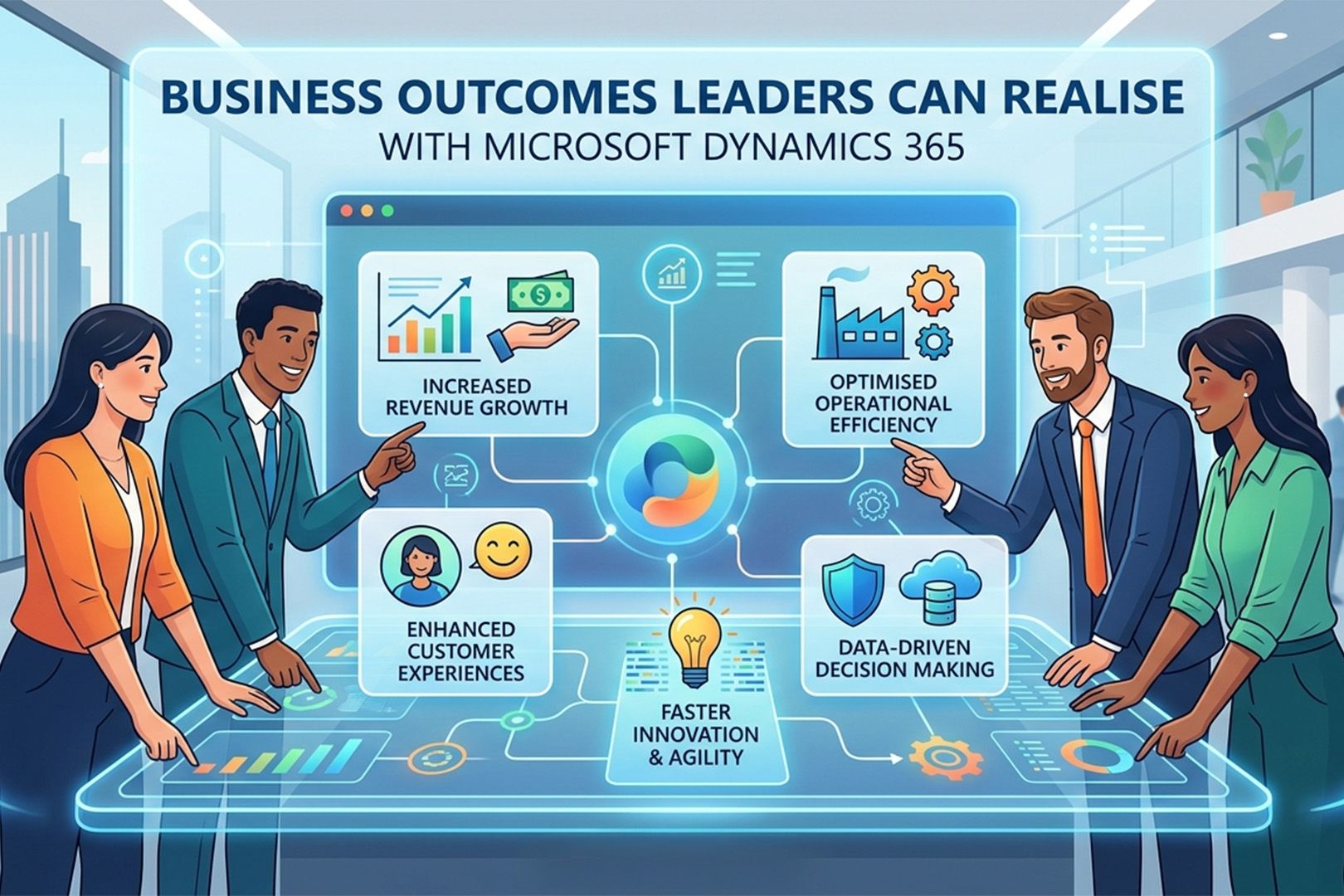
Implementing Microsoft Dynamics 365 Business Central does more than just bring systems together. It creates real, measurable results for your business. Business leaders can expect:
- Greater operational agility- With connected, real-time processes, you can respond more quickly to changes in the market.
- Accelerated decision-making- Unified data helps you move from slow reporting to making decisions based on real insights.
- Stronger customer experiences- You can offer customers a more consistent and personalized experience at every point of contact.
- Improved workforce productivity- Automation and better workflows help your team spend less time on manual tasks.
- Better financial visibility & control- You get up-to-date visibility into how your business is performing, what it costs, and how profitable it is.
- Readiness for continuous innovation- You can adapt and grow your business without interrupting your main operations.
Still Managing Transformation in Silos?
Unify your finance, operations, workforce, and customer systems with a connected Dynamics 365 approach.
A Quick Checklist to Get Started with Your Digital Transformation Roadmap
- Assess current maturity- Understand where your business stands today across systems, processes, and data readiness.
- Identify transformation priorities- Focus on high-impact areas that drive growth, efficiency, or customer experience.
- Define a phased roadmap- Break the journey into manageable stages with clear business outcomes.
- Align leadership stakeholders- Ensure cross-functional ownership beyond just IT.
- Choose the right implementation partner- Select a reliable Microsoft Dynamics 365 solutions partner that aligns with your business goals.
Conclusion
Digital transformation creates real value when it is approached as a well-planned business journey.
As we discussed, success comes from aligning strategy, operations, and execution with a clear plan, using the right platform and expertise. Microsoft Dynamics 365 helps make this possible by connecting data, processes, and decisions throughout the business.
With deep implementation experience across industries and organisation sizes, Mercurius IT helps businesses translate transformation vision into practical outcomes, ensuring Dynamics 365 is fully aligned to drive agility, visibility, and long-term growth.
Frequently Asked Questions
How long does it take to implement Microsoft Dynamics 365 for digital transformation?
The timeline depends on the scope and business complexity. A phased implementation can take anywhere from a few months to a year, depending on the number of functions being transformed.
Do we need to transform the entire organisation at once?
No. Most successful digital transformation initiatives begin with high-impact areas and expand gradually through a structured roadmap.
Is Microsoft Dynamics 365 suitable for mid-sized businesses or only large enterprises?
Dynamics 365 is scalable and designed for organisations of all sizes. It can support both focused transformations and enterprise-wide digital strategies.
How does Dynamics 365 reduce transformation risks?
By providing a unified platform, Dynamics 365 helps eliminate data silos, enhances visibility, and supports phased implementation, thereby reducing disruption and improving adoption.
What business functions can be transformed using Dynamics 365?
Dynamics 365 supports transformation across finance, sales, customer service, operations, HR, supply chain, and project management.
Plan Your Digital Transformation Roadmap