
Quick Summary
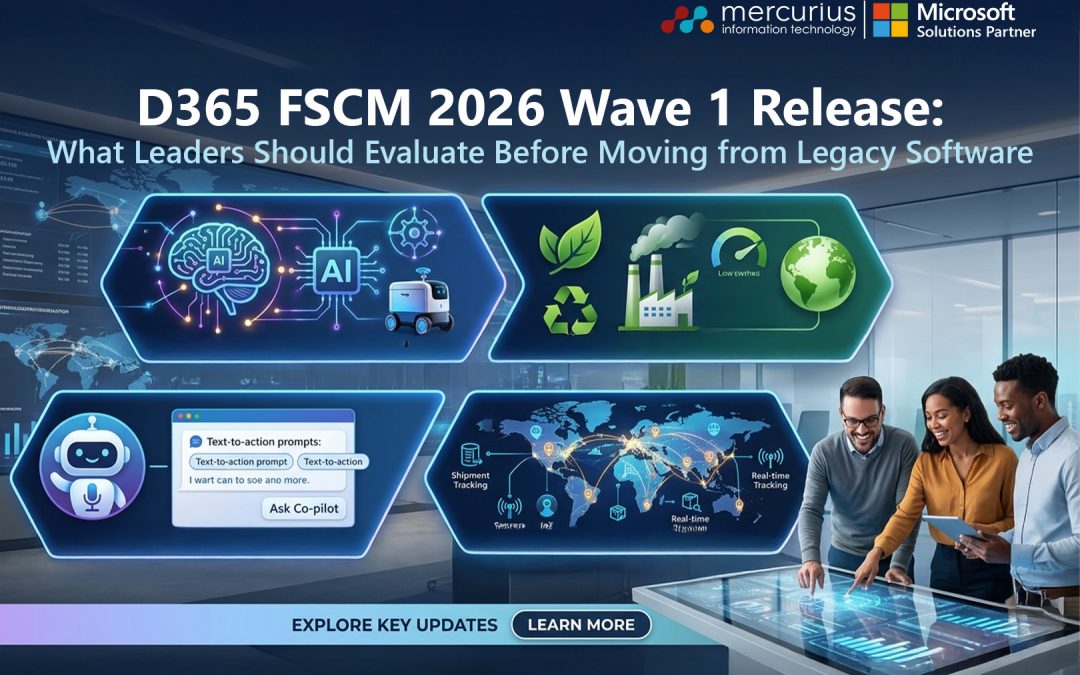
D365 FSCM Wave 1 2026 highlights how finance and supply chain leaders can reduce manual work, improve visibility, and prepare for AI-driven operations.
Key Takeaways
• Wave 1 2026 signals a shift from system upgrades to long-term platform strategy.
• Finance teams can reduce manual reconciliation and accelerate financial close cycles.
• Supply chain leaders gain better planning visibility and more proactive decision-making.
• AI adoption requires structured governance, not just technology enablement.
• Strong data foundations are critical for scalable analytics and automation.
Wave 1 2026 is not just another release.
It is a clear signal of where Dynamics 365 Finance and Supply Chain Management is heading across automation, planning, and AI. For organisations planning a move away from legacy systems or trying to optimise an existing FSCM setup, the implications are strategic.
Too many ERP programmes still focus on technical migration. Systems get replaced, but the same issues remain: manual work, limited visibility, fragmented data, and slow decision‑making.
Wave 1 2026 is an opportunity to pause and ask a more important question.
Are we preparing our platform for long‑term value, AI readiness, and operational performance, or simply changing software?
This webinar is a focused session on making the right D365 FSCM decisions. It offers a practical walkthrough of how Wave 1 2026 influences finance and supply chain operations, AI adoption, and long‑term platform planning.
Still Treating ERP as a Technical Upgrade?
Align your finance and supply chain strategy with Wave 1 2026 and make decisions that deliver long-term operational value.
Why This Matters Now
Wave 1 2026 is not about features in isolation. It highlights direction.
It shows how FSCM is evolving across automation, planning, and AI, and it exposes whether your data, governance, and operating model are truly ready.
This matters now if:
- You are transitioning from legacy systems and want clarity before committing
- You run FSCM today but still struggle with visibility, control, or manual effort
- You want AI adoption, but only with strong governance and audit confidence
- You want measurable operational performance improvements, not disruption
Without this evaluation, ERP programmes risk becoming technical migrations with limited business impact. Wave 1 2026 gives leaders the context to approach change with structure, control, and long‑term thinking.
What This Means for Finance Leaders
Finance teams are expected to close faster, reduce manual effort, and maintain strong governance. Legacy processes and fragmented data often make that impossible.
Common challenges include:
- Close cycles delayed due to manual reconciliation and fragmented data
- AI adoption feeling risky without clear governance and audit visibility
- Multi‑entity operations lacking standardisation and scalability
Wave 1 2026 prompts finance leaders to assess whether their operating model supports:
- Faster financial close with less manual work
- Structured and safer AI adoption validated in controlled environments
- Scalable standardisation across multi‑entity operations
This is about reducing manual matching, streamlining reconciliations, and creating the right foundations for analytics and AI without introducing risk.
What This Means for Supply Chain and Operations
Planning and execution rely on visibility. When teams cannot see across demand, supply, and execution, decisions become reactive.
Common challenges include:
- Planning decisions lacking visibility across demand, supply, and execution
- Procurement and supplier collaboration being reactive rather than data‑driven
- Warehouse and quality processes relying heavily on manual coordination
Wave 1 2026 brings focus to:
- Smarter planning with contextual insights
- Better visibility into supplier performance
- Controlled rollout of new capabilities to minimise disruption
The direction is clear: better planning decisions, quicker response to issues, and reduced reliance on manual coordination across operations.
What This Means for IT and Digital Transformation
IT teams often carry the complexity created by legacy systems, data silos, and integration challenges.
Common challenges include:
- Legacy systems creating integration complexity and data silos
- Governance, security, and data readiness being unclear before scaling AI
- ERP upgrades becoming technical migrations with limited business impact
Wave 1 2026 gives transformation teams the opportunity to re‑centre programmes on:
- Strong data and platform foundations
- Clear governance for scalable analytics and AI usage
- Business outcomes rather than technical completion
This is a shift from “upgrade management” to platform strategy. If this sounds familiar, this session is for you. If you are experiencing delayed financial closes, poor planning visibility, operator‑heavy processes, or uncertainty around AI governance before moving off legacy systems, this session is designed to address those realities.
What You Will Walk Away With
This is an outcome‑focused, practical session. You will leave with clarity on how Wave 1 2026 should shape real decisions.
You will walk away with:
- Faster financial close with less manual work
- Safer and structured AI adoption
- Smarter planning with contextual insights across demand and supply
- Stronger data and platform foundations for long‑term scalability
- More proactive supplier and procurement decisions
- Controlled rollout of new capabilities with minimal disruption
Make the Right ERP Decisions Before You Migrate
Evaluate your data, governance, and AI readiness before committing to your next phase of Dynamics 365 FSCM.
Who Should Attend
This webinar is designed for:
- Finance leaders, controllers, and shared services teams
- Supply chain, procurement, and planning leaders
- Operations, warehouse, and manufacturing teams
- IT and digital transformation teams responsible for ERP governance, integrations, and data readiness
- Organisations transitioning from legacy systems or improving existing D365 FSCM setups
Webinar Details
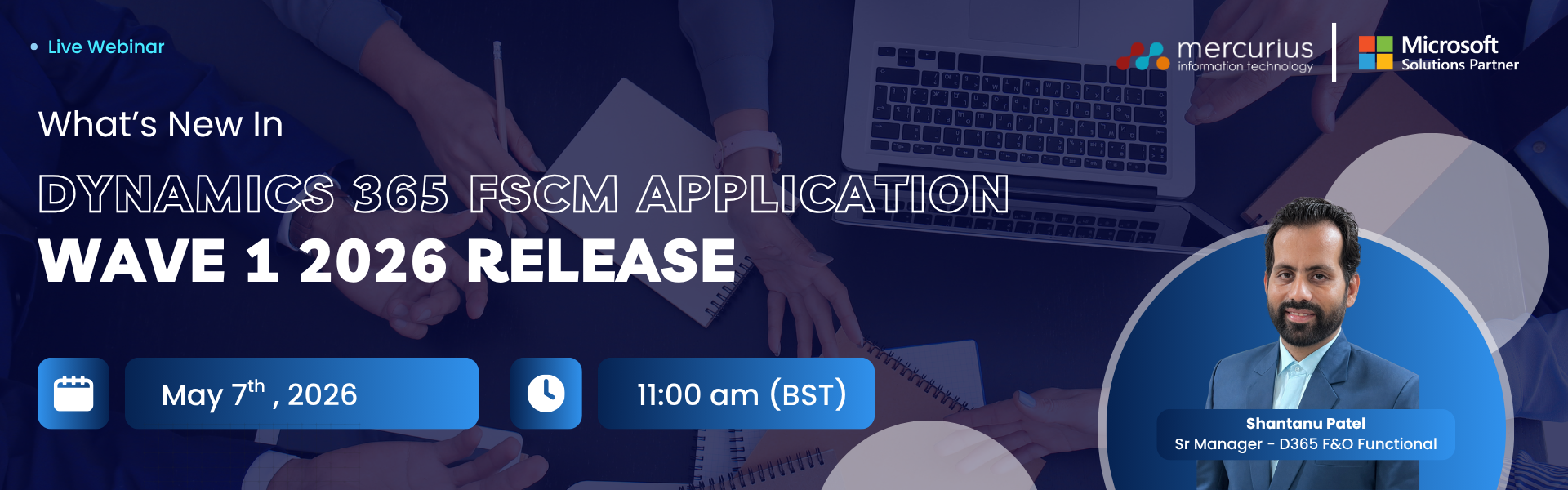
D365 FSCM 2026 Wave 1 Release: What Businesses Should Think About Before Moving from Legacy Software
Limited seats only
Thursday, 7 May 2026
11:00 – 11:50 am BST
Speaker: Shantanu Patel
Senior Manager, D365 Finance and Operations Functional, Mercurius IT
Shantanu works with organisations to design scalable finance and supply chain operating models on Dynamics 365. His focus is on structured adoption, governance, and long‑term platform value, including legacy‑to‑D365 FSCM roadmaps across data, automation, and operational efficiency, with strong control over risk and compliance.
- Live webinar, free to attend
- Q&A session included
- Recording sent to all registrants
Frequently Asked Questions
Is this webinar relevant if we are still using legacy ERP systems?
Yes. This session is designed specifically for organisations evaluating a move from legacy systems and needing clarity before making major ERP decisions.
Will this webinar focus on business impact or just product features?
The session focuses on business outcomes such as faster financial close, improved planning, and AI readiness, not just feature walkthroughs.
Can this help if we are already using Dynamics 365 FSCM?
Yes. It will help you assess whether your current setup is aligned with the direction of Wave 1 2026 and identify areas for optimisation.
Will AI adoption and governance be covered in detail?
Yes. The session will explain how to approach AI adoption in a controlled and structured way, ensuring governance, auditability, and risk management.
Is this webinar suitable for both finance and operations teams?
Yes. The session will explain how to approach AI adoption in a controlled and structured way, ensuring governance, auditability, and risk management.
Planning an ERP Move Without a Clear Direction?