
Quick Summary
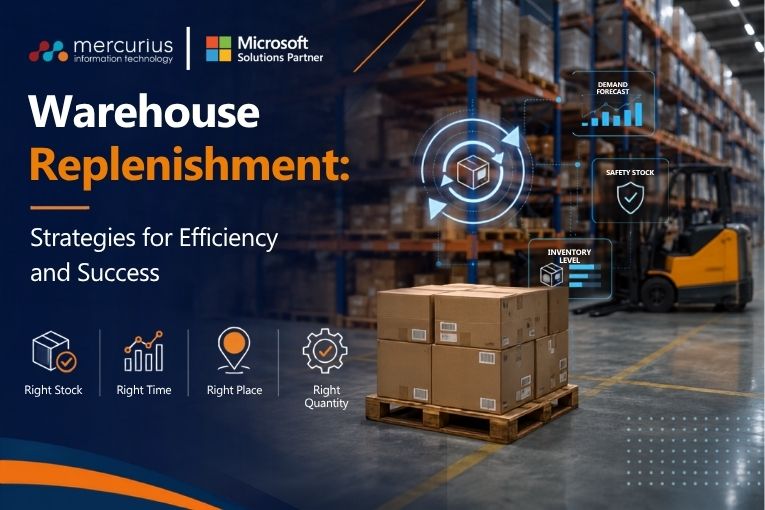
Effective warehouse replenishment keeps stock available for picking, reduces unnecessary movement and labour costs, and improves fulfilment performance.
Key Takeaways
- Warehouse replenishment ensures stock is always available in picking locations when orders need to be fulfilled.
- An effective replenishment strategy improves order fulfilment speed, inventory accuracy and warehouse productivity.
- Poor replenishment processes can lead to stockouts, delayed shipments, increased labour costs and dissatisfied customers.
- Demand-based replenishment, min-max stock levels and wave replenishment help maintain optimal inventory levels while reducing operational disruption.
- Slotting optimisation places fast-moving products closer to picking areas, reducing travel time and improving efficiency.
- Automation and modern Warehouse Management Systems (WMS) provide real-time visibility, automated replenishment triggers and better operational control.
- Monitoring KPIs such as stockout rate, replenishment cycle time and inventory accuracy helps identify improvement opportunities.
- For 3PLs, effective replenishment supports SLA performance, customer satisfaction and profitable growth.
- Solutions such as Boltrics WMS and Microsoft Dynamics 365 help warehouse operators automate processes, improve accuracy and scale efficiently.
- Businesses that modernise replenishment processes are better positioned to reduce costs, increase throughput and deliver consistently high service levels.
Warehouse Replenishment: Why it Matters for Efficiency, Cost Control and Customer Satisfaction
Working in logistics is to make sure your warehouse runs smoothly. While you ensure that, the warehouse replenishments often get overlooked. If it’s well executed it can drive efficiency, reduce costs and help maintain a high standard of service. However, neglection can lead to stockouts, delayed orders and unhappy customers
Having a smart replenishment strategy, whether it’s in a single facility or multi-network facilities ensures success in the long run. This blog will give you an overview of warehouse replenishment, why it matters and what are the key strategies that can help you improve both efficiency and customer satisfaction.
Why Warehouse Replenishment Efficiency Matters?
Improved Order Fulfilment
If your inventory is in the right place at the right time, then your picking staff can pick efficiently without delays. This leads to faster order processing and less error.
Lower Operational Costs
Good replenishment eliminates last-minute stock movements, eliminates travel time within the warehouse and saves labour costs.
Better Inventory Accuracy
With constant and accurate restocking, records of inventory are always reliable. This helps in forecasting and prevents overstocking or stockouts.
Enhanced Customer Satisfaction
Timely and accurate deliveries are one of the major drivers of customer satisfaction. Replenishment achieves this by making your picking points always full.
Successful Warehouse Replenishment Methods
Every warehouse is different, but the following procedures can be adapted to suit a wide range of operations. These methods have been discovered to increase efficiency and allow for better outcomes.
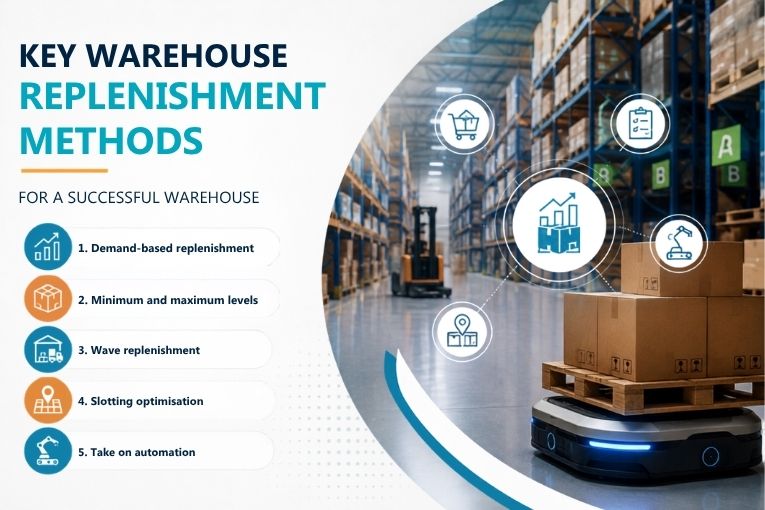
Demand-based Replenishment
This process uses real sales and order history to trigger replenishment activities. Instead of relying on predetermined schedules, the system responds to real-time demand, triggering stock to be moved where it is needed most.
By connecting your warehouse management system to forecasting systems, you can automate the process and have even more control over stock movement.
Minimum and Maximum Levels
Creating minimum and maximum stock levels is an easy and efficient means to control replenishment. When stock falls below minimum level, it automatically gets replenished up to maximum.
This approach is appropriate for high-volume items and provides a reliable structure that minimises stockout risk.
Wave Replenishment
Wave replenishment plans stock movement by picking shifts or workload waves. This allows you to plan and preplan picking zones and avoid last-minute scrambles.
For example, replenishment might be done early mornings in anticipation of being able to pick much stock during a high-volume picking window in the latter part of the day.
Slotting Optimisation
Replenishment is much more efficient when things are put in the right spot. Regular reviewing of product location ensures high-volume products are situated close to the picking areas and slower-moving merchandise is stored in bulk storage.
This reduces frequency of replenishing and minimises walking time within the warehouse.
Take on Automation
Modern warehouses are increasingly leveraging automation to streamline replenishment. Some of the technologies that can reduce labour and accelerate processes include automated guided vehicles, conveyors and smart robotics.
Advanced warehouse management systems, especially those that are based on platforms such as Microsoft Dynamics 365, provide real-time visibility, automate replenishment procedures and provide insights to drive overall performance.
What are the Most Common Warehouse Replenishment Challenges?
Even the most well-designed plans may go wrong if certain problems are not addressed. Some common pitfalls to be avoided are:
Manual Processes
Reliance on paper-based systems or manual data entry increases the risk of errors and slows everything down.
Lack of Real-Time Data
Stale inventory data can lead to unnecessary replenishments or unexpected stockouts. There is a need for a centralised, up-to-date system.
Poor Communication
Without transparent communication among warehouse teams, replenishment operations can result in delays and confusion. Coordination is critical to making flow happen.
Replace Manual Replenishment with Smarter Warehouse Control
Improve stock visibility, reduce emergency movements and automate replenishment activities across your warehouse.
How do you know your Warehouse Replenishment Strategy is Not Working?
Many warehouses only notice replenishment problems when order fulfilment starts suffering. The warning signs often appear much earlier.
Some common indicators include:
- Pickers regularly waiting for stock to arrive
- Frequent emergency stock movements
- Increasing labour costs without higher throughput
- Rising stockout incidents despite healthy inventory levels
- Congestion in picking zones during peak periods
- Reduced order accuracy and missed dispatch deadlines
If your team is spending more time firefighting than fulfilling orders, replenishment processes may be the root cause. Regularly reviewing replenishment performance can help identify bottlenecks before they impact customer service and profitability.
Key Replenishment KPIs to Track
To improve replenishment performance, monitor:
- Inventory Accuracy Rate
- Stockout Frequency
- Replenishment Cycle Time
- Order Picking Productivity
- Labour Cost per Order
- Order Fulfilment Rate
- Warehouse Throughput
Tracking these metrics provides the visibility needed to make informed decisions and continuously optimise warehouse operations.
Warehouse Replenishment Best Practices for 3PL Providers
Warehouse replenishment becomes significantly more complex in a third-party logistics environment. Unlike a single-product warehouse, 3PL providers often manage multiple customers, varying inventory profiles, seasonal demand fluctuations and different service level agreements.
To maintain efficiency across multiple clients, successful 3PL operators typically:
- Use real-time inventory visibility across all warehouse locations
- Automate replenishment triggers based on demand patterns
- Prioritise high-velocity SKUs for optimal slotting
- Standardise replenishment workflows across customers
- Leverage barcode scanning and mobile warehouse technology
- Use advanced Warehouse Management Systems to coordinate stock movement
Modern solutions such as Boltrics WMS and Microsoft Dynamics 365 enable 3PL businesses to automate replenishment decisions, improve inventory accuracy and scale operations without proportionally increasing labour costs.
For logistics providers handling high order volumes, effective replenishment is no longer simply a warehouse activity. It is a strategic capability that directly affects profitability, customer retention and long-term growth.
Scale 3PL Warehouse Operations Without More Manual Work
Give your warehouse teams real-time inventory visibility and automated replenishment workflows across multiple customer operations.
How Mercurius IT Can Help
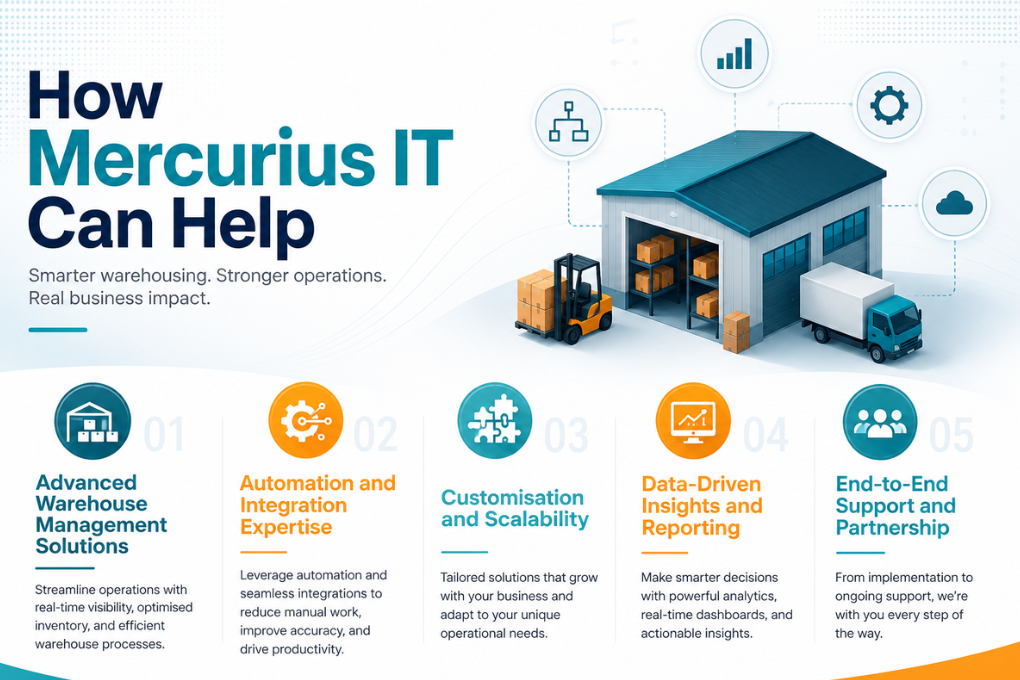
Advanced Warehouse Management Solutions
We implement and customise powerful Warehouse Management Systems (WMS), such as Boltrics 3PL Dynamics and Microsoft Dynamics 365, tailored to your business needs. These systems automate and streamline replenishment, inventory tracking, picking, and reporting, reducing manual work and minimising errors.
– Real-time inventory visibility and replenishment triggers
– Automated cycle counting, cross-docking, and quality control
– Seamless integration with ERP, CRM, and other business-critical systems
Automation and Integration Expertise
Our team enables end-to-end automation, from order receipt to picking and replenishment, using technologies like DataHub, robotic Warehouse Control Systems (WCS), and EDI integration. This ensures your warehouse can handle high order volumes, meet tight delivery deadlines, and operate efficiently 24/7
– Robotic automation for picking and replenishment
– Data-driven workflows that eliminate manual bottlenecks
– Integration with e-commerce platforms and delivery management solutions
Customisation and Scalability
We understand that every business is unique. Mercurius IT works closely with clients to configure and customise solutions that fit your specific processes, industry requirements, and growth ambitions.
– Modular WMS features for public, contract, and multi-customer warehouses
– Scalable cloud-based solutions accessible from any device, anywhere
– Ongoing support and system enhancements as your business evolves
Data-Driven Insights and Reporting
Our solutions provide actionable analytics and real-time dashboards, empowering your team to make informed decisions about replenishment, stock levels, and supplier performance
– Predictive analytics for demand forecasting and replenishment planning
– Custom management reports for operational and financial visibility
– KPI tracking for continuous improvement
End-to-End Support and Partnership
Mercurius IT is more than just a technology provider, we become your business partner. From initial consultation and process mapping to system implementation, training, and ongoing support, we ensure your operations run smoothly and you get the most from your investment.
-Dedicated project management and user training
– 24/7 support for mission-critical systems.
– Continuous optimisation and proactive advice
Driving Real-World Results
Clients such as Jenkins, HSH, Lineage, and Newitts have experienced significant improvements in efficiency, order processing capacity, and customer satisfaction after partnering with Mercurius IT for their warehouse and replenishment needs. Want to level up your replenishment strategy?
Frequently Asked Questions
What is warehouse replenishment?
Warehouse replenishment is the process of moving stock from bulk or reserve storage locations to picking locations to ensure products remain available for order fulfilment.
Why is warehouse replenishment important?
Effective replenishment helps prevent stockouts, improves picking efficiency, reduces labour costs, enhances inventory accuracy, and ensures orders are delivered on time.
What are the different types of warehouse replenishment?
The most common replenishment methods include:
- Demand-based replenishment
- Min-max replenishment
- Wave replenishment
- Scheduled replenishment
- Top-off replenishment
- Dynamic replenishment based on real-time inventory levels
What is demand-based replenishment?
Demand-based replenishment uses real-time sales and order data to trigger stock movements. This approach helps ensure inventory is replenished based on actual demand rather than fixed schedules.
How can a Warehouse Management System improve replenishment?
A modern WMS automates replenishment tasks by monitoring stock levels, triggering replenishment activities, providing real-time inventory visibility, and helping warehouse teams optimise inventory placement and labour allocation.
What are common warehouse replenishment challenges?
Common challenges include:
- Poor inventory visibility
- Manual stock management processes
- Inaccurate inventory data
- Inefficient warehouse layouts
- Lack of forecasting capabilities
- Communication gaps between warehouse teams
What KPIs should be tracked for warehouse replenishment?
Key replenishment metrics include:
- Inventory Accuracy Rate
- Replenishment Cycle Time
- Stockout Rate
- Order Fulfilment Rate
- Labour Cost per Order
- Picking Productivity
- Warehouse Throughput
How does replenishment affect customer satisfaction?
Efficient replenishment ensures products are available when needed, reducing fulfilment delays and helping businesses maintain high service levels and on-time delivery performance.
What is the role of replenishment in a 3PL warehouse?
In a 3PL environment, replenishment supports multiple customers, varying inventory profiles, and different service level agreements. Effective replenishment helps maintain operational efficiency, customer satisfaction, and profitability across all client accounts.
How can automation improve warehouse replenishment?
Automation technologies such as barcode scanning, robotics, automated guided vehicles (AGVs), conveyors, and AI-driven warehouse management systems can reduce manual effort, improve accuracy, and speed up stock movement throughout the warehouse.