
Quick Summary
Manual CRM creates hidden costs through inefficiency, poor data, and missed revenue. This blog explains how CRM automation transforms these challenges into measurable gains for modern business leaders.
Key Takeaways
- Manual CRM wastes selling time and reduces team productivity
- Poor data quality leads to weak decisions and unreliable forecasts
- Automation improves pipeline visibility and revenue predictability
- Unified CRM enhances customer experience and retention
- Automated CRM strengthens compliance, control, and leadership insight
Did you know that about 32% of sales reps spend over an hour each day entering data into their CRM? That adds up to nearly a full workday every week spent on repetitive tasks like typing, updating records, and searching for information instead of building relationships or making sales.
This is a real business cost. When teams spend too much time on manual CRM work, productivity falls, mistakes increase, and missed opportunities can go unnoticed. For leaders focused on growth, this hidden problem can slowly reduce both competitiveness and profits. That’s why more businesses are turning to CRM automation.
In this blog, we will explore where manual CRM falls short and how automation effectively solves these challenges, helping you make smarter decisions and get more value from your CRM investment.
What is a Manual CRM Process?
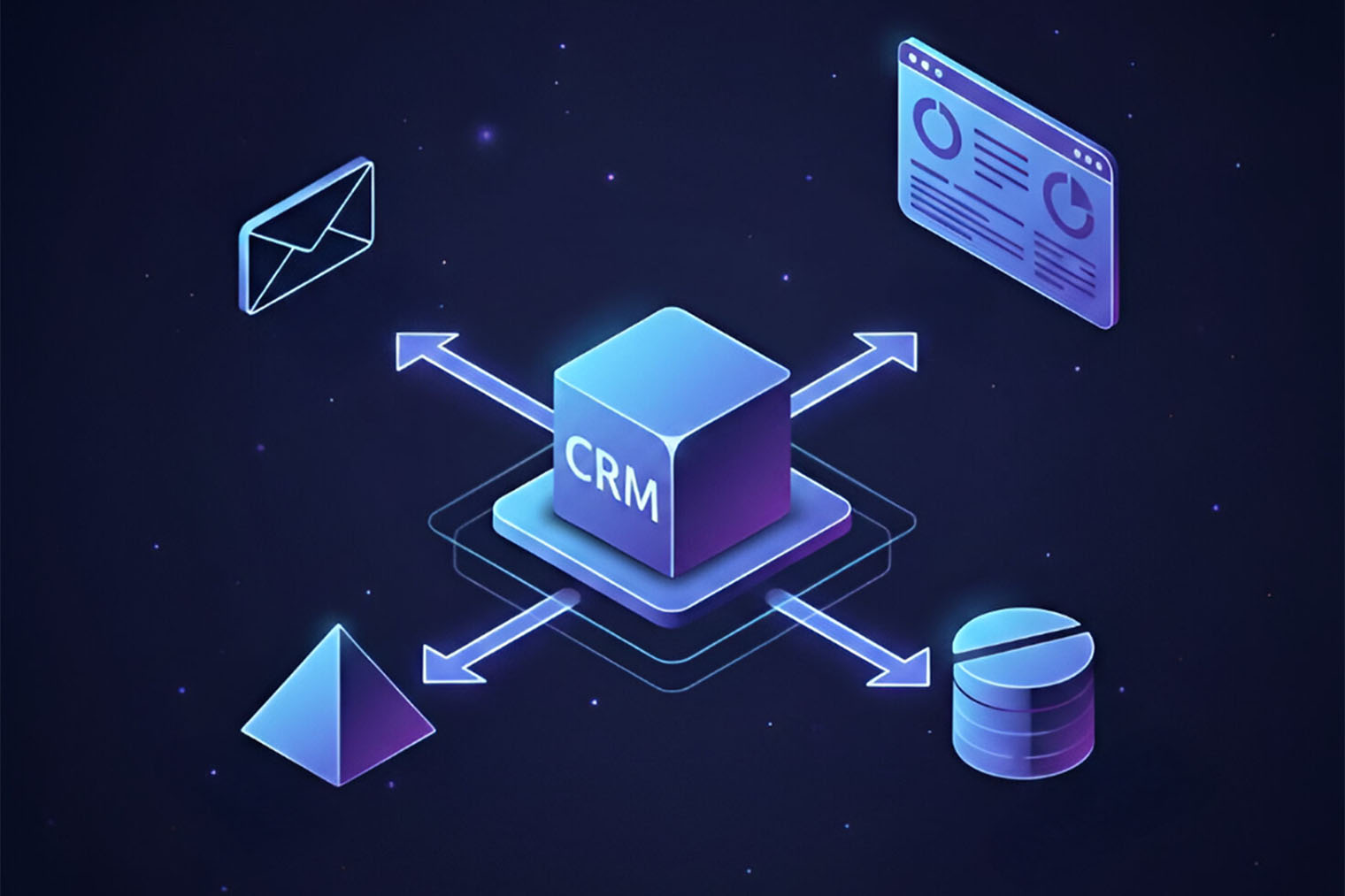
A manual CRM process refers to managing customer information and sales activity using tools that rely heavily on human effort rather than automation. In many organisations, this still means
- Tracking leads and customers through spreadsheets
- Logging interactions by hand
- Switching between standalone tools such as email, calendars, and basic reporting systems that don’t talk to each other.
While these methods may work at a small scale, they depend entirely on people remembering to update data accurately and consistently.
So why do businesses continue to rely on manual CRM processes?
One reason is familiarity. Spreadsheets and basic tools are easy to use and require little training. Teams are comfortable with them, and leaders may see no immediate reason to change.
In fact, there is also a perception of lower cost. Although manual systems appear cheaper because they don’t involve licensing fees or implementation projects. Finally, manual CRM offers short-term convenience. It’s quick to set up and can feel good enough in the early stages of growth.
However, this is where the leadership blind spot emerges.
Manual CRM processes do not scale. As customer volumes increase, teams grow, and sales cycles become more complex, these systems start to break down. Data becomes inconsistent, visibility is lost, and decision-making slows.
Manual CRM Is Costing You More Than You Think
Identify hidden productivity losses, revenue gaps, and compliance risks holding your teams back.
Hidden Cost of Manual CRM and How Automation Addresses Them?
1. Productivity Loss from Manual Data Handling
In many UK businesses, sales and service teams still spend a significant part of their day on non-value-adding admin work. Time is lost updating records after every call, searching across spreadsheets or inboxes for customer information, and manually logging interactions that should happen automatically.
This creates a high dependency on individuals rather than systems. If someone forgets to update a record or logs information differently, data quality suffers. Over time, this slows execution, creates duplication of effort, and leads to team fatigue.
In fact, research shows that sales teams can spend over 30% of their time on administrative tasks, directly reducing the time available for selling and customer engagement.
How CRM Automation Solves It
CRM automation removes this friction by capturing data automatically from emails, calls, forms, and customer interactions, without relying on manual input. All customer information is stored in a centralised system, updated in real time, and accessible to everyone who needs it.
So, instead of switching between tools or chasing information, teams can focus on what they do best – selling, supporting customers, and building relationships. In fact, businesses using CRM automation can improve sales productivity by up to 15–20%.
The Leadership impact – Higher productivity and output, without increasing headcount.
2.Poor Data Quality Leading to Weak Decisions
Manual CRM processes often result in duplicate records, outdated contact details, and inconsistent data spread across teams. Sales, marketing, and service departments may each maintain their own version of customer information, leading to conflicting reports and a lack of clarity.
According to a Gartner survey, 59% of organisations do not measure data quality. That makes it complicated to know what a lack of quality is costing you and how much improvement your data quality management program is producing. In fact, poor data quality costs organisations at least $12.9 million a year on average.
For SMBs, this usually shows up as unreliable pipeline forecasts. In larger enterprises, it becomes a bigger issue as leadership teams keep reviewing reports that look polished but are built on incomplete or inaccurate data. Even the decisions made on such insights increase risk, slow response times, and weaken strategic planning.
How CRM Automation Solves It
CRM automation creates a single source of truth for all customer data. Information is captured, updated, and shared automatically across departments, ensuring everyone works from the same, up-to-date view. With a standardised data entry, built-in validation, and real-time updates, automation eliminates duplication and reduces human error. Leaders gain access to accurate dashboards and reports they can trust, without waiting for manual consolidation.
The Leadership impact – Faster, smarter decisions backed by reliable, current insights.
3. Missed Revenue and Unclear Sales Pipelines
With manual CRM processes, leads are often followed up late, or not at all. Sales activity is tracked across spreadsheets, inboxes, or individual notes, making it difficult to see where deals truly stand. As a result, pipeline visibility becomes fragmented and revenue forecasting turns into educated guesswork.
How CRM Automation Solves It
CRM automation ensures leads are assigned instantly, follow-ups are triggered automatically, and no opportunity is left unattended. Sales teams gain access to visual pipelines that clearly show deal stages, priorities, and risks in real time. With predictive insights into deal health and revenue trends, leaders can forecast with greater accuracy and identify growth opportunities earlier rather than reacting after revenue is lost.
The Leadership impact- Stronger pipeline visibility, accurate forecasting, and more consistent revenue growth.
4. Inconsistent and Frustrating Customer Experience
Manual CRM processes often leave customers feeling unheard. They’re asked to repeat the same information at different stages because sales, support, and marketing teams don’t share a complete view of the customer. Each interaction exists in isolation, creating a disjointed experience.
According to Forbes, 81% of customers prefer companies that offer a personalised experience, and 70% say a customised experience in which the employee knows who they are and their history with the company.
For businesses, the impact is visible by inconsistent messaging, limited personalisation, and declining customer satisfaction, even when teams are working hard. At scale, manual processes make it almost impossible to deliver personalised experiences consistently.
How CRM Automation Solves It
CRM automation provides a single, complete customer history that’s accessible at every touchpoint. Teams can see previous interactions, preferences, and activity in real time, enabling more relevant and personalised communication.
Automated workflows speed up responses, while behaviour-based triggers help tailor outreach without manual effort. This allows businesses to deliver consistent, personalised experiences at scale without adding pressure on teams.
The Leadership impact – Stronger customer loyalty and increased brand trust.
5. Limited Visibility and Control for Leadership
With manual CRM processes, reporting is often delayed, fragmented, or built manually at the end of the week or month. Leaders don’t have access to real-time dashboards and are forced to rely on spreadsheets, static reports, or verbal updates from teams.
For businesses, this brings a huge risk as the decisions are made based on assumptions rather than live data. Without clear visibility into pipeline health, customer activity, or service performance, issues are often spotted only after they start impacting revenue or customer satisfaction.
How CRM Automation Solves It
CRM automation provides real-time dashboards and KPIs across sales, service, and operations. Leaders can access on-demand reports that show exactly what’s happening now, not what happened weeks ago. With clear visibility into performance, risks, and growth opportunities, leadership teams can act early, course-correct faster, and align decisions with accurate data across the business.
The Leadership impact- Proactive and data-driven leadership with greater control and confidence.
6. Compliance, Security, and Operational Risk
Manual CRM processes significantly increase operational and compliance risk. When customer data is handled through spreadsheets, emails, or shared files, the likelihood of human error, unauthorised access, or data loss rises sharply. There is often little to no visibility into who accessed or changed data and when.
How CRM Automation Solves It
CRM automation introduces role-based access controls, ensuring employees only see the data relevant to their role. Automated audit logs track every change, providing full transparency and accountability. With built-in compliance features aligned to regulatory standards, automated CRM systems help organisations manage data securely, maintain audit readiness, and reduce dependency on manual controls that are prone to failure.
The Leadership impact – Reduced risk, stronger compliance, and improved governance across the organisation.
Reduce CRM Risk Before It Becomes a Compliance Issue
Replace spreadsheets with secure, GDPR-aligned CRM automation built for UK businesses.
Manual CRM vs Automated CRM: A Leadership-Level Comparison
This quick comparison provides a quick snapshot that highlights the key differences between manual and automated CRM. This can make it easier for the business leaders to see where automation delivers real value.
| Business Area | Manual CRM | Automated CRM |
|---|---|---|
| Productivity | Low due to manual data entry and admin-heavy tasks | High with automated workflows and data capture |
| Data accuracy | Inconsistent and prone to duplication | Reliable with a single source of truth |
| Revenue visibility | Limited and delayed | Real-time pipeline and forecasting insights |
| Customer experience | Fragmented across teams and touchpoints | Unified and consistent across the customer journey |
| Compliance & security | Risk-prone with limited controls | Built-in security, access controls, and audit trails |
Key Considerations Before Moving to CRM Automation
Moving to CRM automation requires complete planning and strategy. So, before transforming, business leaders should focus on a few critical factors to ensure long-term value.
- Align with Business Objectives- Ensure CRM automation directly supports your goals, whether that’s improving sales visibility, customer experience, or regulatory compliance.
- Ease of Adoption for Teams- Choose a system that’s intuitive and easy to use. High adoption across sales and service teams is critical, especially for UK SMBs with limited time for training.
- Integration with Existing Systems- The CRM should connect smoothly with ERP, finance, marketing, and support tools to avoid data silos and duplicated effort.
- Scalability for Future Growth- Select a solution that can grow with your business, handling increased data volumes, users, and complexity without disruption.
- Partner Expertise and Local UK Support- Work with an experienced Microsoft Dynamics 365 CRM partner who understands UK business practices and GDPR requirements to ensure a smooth and compliant implementation.
Conclusion
Manual CRM quietly drains productivity, weakens data quality, limits visibility, and increases risk. Over time, these hidden costs add up, slowing growth and making it harder for leaders to make confident, informed decisions.
CRM automation changes that equation. By eliminating manual effort, unifying customer data, and delivering real-time insights, automation turns inefficiencies into measurable business gains like higher team productivity, improved forecasting, stronger customer experiences, and better governance.
For organisations looking to move forward with confidence, choosing the right technology and the right partner is critical. As a Microsoft Certified Partner, Mercurius IT helps businesses implement Microsoft CRM solutions that align with real business goals, ensuring scalability, compliance, and long-term value.
Frequently Asked Questions
What are the hidden costs of manual CRM processes?
Manual CRM wastes time on data entry, creates errors, and reduces visibility. This slows decision-making, lowers productivity, and leads to missed revenue opportunities.
How does CRM automation improve sales productivity?
Automation removes repetitive tasks like logging calls or updating records, assigns lead automatically, and frees sales teams to focus on selling and revenue growth.
Can automation help with CRM data quality issues?
Yes. Automated CRM ensures accurate, up-to-date data across departments, eliminates duplicates, and provides a single source of truth for confident, fast decisions.
What are the benefits of integrating CRM with automation tools?
Integration streamlines workflows, connects systems, unifies customer data, and enables real-time insights, improving efficiency, customer experience, and revenue outcomes.
What are common CRM compliance risks without automation?
Manual CRM increases errors, lacks audit trails, and exposes businesses to GDPR breaches or unauthorised access, creating operational and regulatory risk.
What’s the difference between manual CRM and automated CRM?
Manual CRM relies on spreadsheets and human entry, causing delays and errors. Automated CRM captures and updates data in real time, boosting productivity, accuracy, and insights.
Start your CRM Automation Plan