
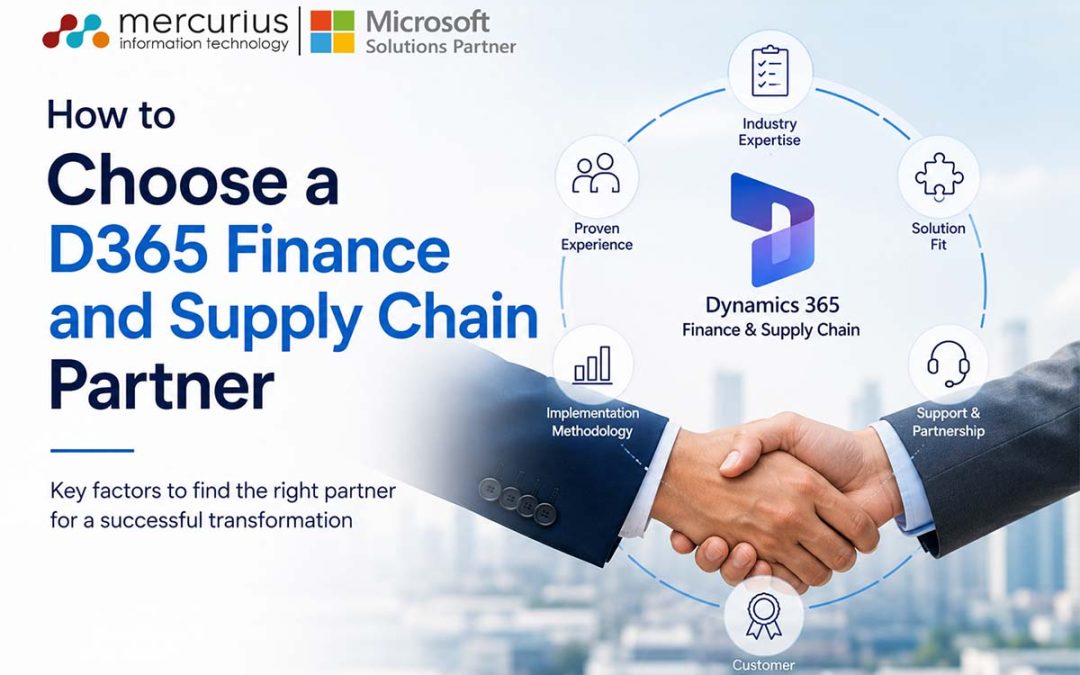
Quick Summary
Selecting the right Dynamics 365 Finance and Supply Chain partner can determine whether your ERP transformation succeeds or faces costly challenges. The reliable partners offer industry expertise, Dynamics 365 FSCM experience, strong project governance, integration skills, and ongoing support to drive faster adoption, lower project risk, and deliver measurable business value.Key Takeaways
- The success of a Dynamics 365 Finance and Supply Chain project relies equally on the implementation partner and the technology.
- Industry expertise enables partners to align Dynamics 365 with sector-specific processes, compliance needs, and operational objectives.
- Effective implementation methodology, governance, and change management reduce project risk and enhance user adoption.
- Integration, data migration, and post-go-live support are essential for long-term ERP success.
- The best partner is selected based on experience, business value, and proven results, rather than the lowest implementation cost.
According to Gartner, more than 70% of recently implemented ERP initiatives are expected to fail to fully meet their original business goals by 2027. The challenge often lies in the implementation approach, governance, and partner expertise that determine success.
For organisations investing in Microsoft Dynamics 365 Finance and Supply Chain Management, choosing the right D365 Finance and Supply Chain Partner UK can directly impact project timelines, user adoption, operational efficiency, and long-term return on investment. A partner that lacks industry knowledge, process expertise, or delivery experience can lead to budget overruns, implementation delays, and missed business outcomes.
While cost is an important consideration, selecting a partner based solely on the lowest quote often creates greater risks later in the project. Businesses should evaluate implementation providers based on their Dynamics 365 expertise, industry experience, project methodology, customer success record, and post-go-live support capabilities. This blog shares the key factors decision-makers should assess before selecting a Dynamics 365 implementation partner.
Why Your Choice of Partner Matters More Than the Technology
A successful Dynamics 365 Finance and Supply Chain implementation depends as much on the partner as it does on the platform itself. Most ERP projects do not struggle because of software limitations. In fact, they struggle due to
- Poor planning
- Inadequate change management
- Weak data migration strategies
- Lack of business process expertise
Even the consequences can be significant. Budget overruns, low user adoption, poor-quality data, and operational disruption can delay the realisation of business benefits and increase project costs.
The right partner helps mitigate these risks by bringing proven delivery methodologies, industry expertise, and strong project governance. They align the solution with your business goals, support user adoption, and accelerate time-to-value, helping your organisation realise ROI faster and with less disruption.
Planning a Dynamics 365 Finance and Supply Chain implementation?
Speak with our Dynamics 365 specialists to discuss your requirements and identify the right approach for your business.
Factors to Evaluate When Choosing a D365 Finance and Supply Chain Partner
Not all Dynamics 365 partners offer the same level of expertise, industry knowledge, or long-term support. The right partner should not only understand the technology but also your business objectives, operational challenges, and growth plans. When evaluating a Microsoft Dynamics 365 FSCM partner, focus on the following factors to maximise the return on your ERP investment.
1. Industry-Specific Experience
A partner may have strong Dynamics 365 credentials, but that does not automatically mean they understand your industry. Look for experience delivering projects in industries like manufacturing, distribution, retail, wholesale, logistics, or professional services. Industry expertise helps partners understand operational challenges, compliance requirements, and best practices from the outset.
Also Read: Top Industries Benefitting from Dynamics 365 Finance & SCM
2. Dynamics 365 Finance & Supply Chain Expertise
Finance and supply chain operations are often among the most complex areas of an ERP implementation. Your partner should have proven experience implementing Dynamics 365 Finance and Supply Chain Management, not just general Dynamics 365 solutions.
Assess their ability to design scalable solutions, support business process transformation, and integrate Dynamics 365 with other business-critical systems.
3. Microsoft Certifications and Partner Credentials
Microsoft certifications can provide confidence that a partner invests in maintaining technical expertise and staying aligned with Microsoft’s product roadmap. However, credentials should be viewed as supporting evidence rather than the sole decision-making factor.
The strongest Companial partners combine recognised certifications with a proven delivery track record.
4. Implementation Methodology and Project Governance
A structured implementation approach is often the difference between a smooth deployment and a costly project recovery exercise. Ask potential partners how they manage discovery, requirements gathering, testing, risk management, and user adoption.
Review their discovery and assessment process, solution design methodology, testing strategy & change management framework.
5. Supply Chain and Finance Process Knowledge
Technology alone does not improve business performance. The real value comes from aligning the platform with your finance and operational processes.
Look for a Dynamics 365 consulting partner UK who understands areas such as financial reporting, budgeting, procurement, inventory management, warehouse operations, demand planning, and production processes. Strong process knowledge often leads to better business outcomes than technical expertise alone.
6. Integration and Data Migration Capabilities
Most organisations do not implement Dynamics 365 in isolation. The platform often needs to connect with CRM systems, reporting tools, e-commerce platforms, and legacy applications.
Evaluate D365 FSCM implementation partner experience with:
A capable partner should have a clear strategy for managing integrations, data quality, and migration risks, while minimising disruption to daily operations.
7. Post-Go-Live Support and Optimisation Services
Going live is just the beginning. As business requirements evolve, organisations often need ongoing support, user training, system enhancements, and optimisation services.
Selecting a partner that provides long-term support helps maximise the value of your Dynamics 365 FSCM investment beyond implementation.
8. Customer References and Proven Success
One of the most effective ways to assess a partner is to speak with their customers. References and case studies provide valuable insight into how a partner performs under real-world conditions.
Look beyond project completion and focus on measurable business outcomes. Request for the
- Customer references
- Word of mouth
- Industry-specific case studies
- Project outcomes and benefits achieved
- Client retention rates
Not sure whether your current ERP environment is ready for Dynamics 365?
Book a discovery consultation with our experts and get tailored recommendations for your organisation.
Questions UK Businesses Should Ask Before Selecting a Dynamics 365 Partner
Selecting a Dynamics 365 partner is a long-term business decision. Beyond reviewing proposals and credentials, decision-makers should ask questions that reveal a partner’s experience, delivery capabilities, and commitment to long-term success. The answers can help you identify potential risks, compare providers more effectively, and choose a partner that aligns with your business objectives.
Consider asking the following questions during the evaluation process:
- How many Dynamics 365 Finance and Supply Chain projects have you delivered successfully?
- Do you have experience working with organisations in our industry?
- Who will be assigned to our project, and what is their experience?
- What implementation methodology and governance framework do you follow?
- How do you identify, manage, and mitigate project risks?
- What support and optimisation services do you provide after go-live?
- Can you share relevant customer references or case studies?
- How do you approach integrations, data migration, and data quality challenges?
A reliable Microsoft D365 FSCM implementation partner should be able to answer these questions clearly, provide evidence of previous success, and explain how they will help your organisation achieve measurable business outcomes.
Common Mistakes Businesses Make When Choosing a D365 Partner
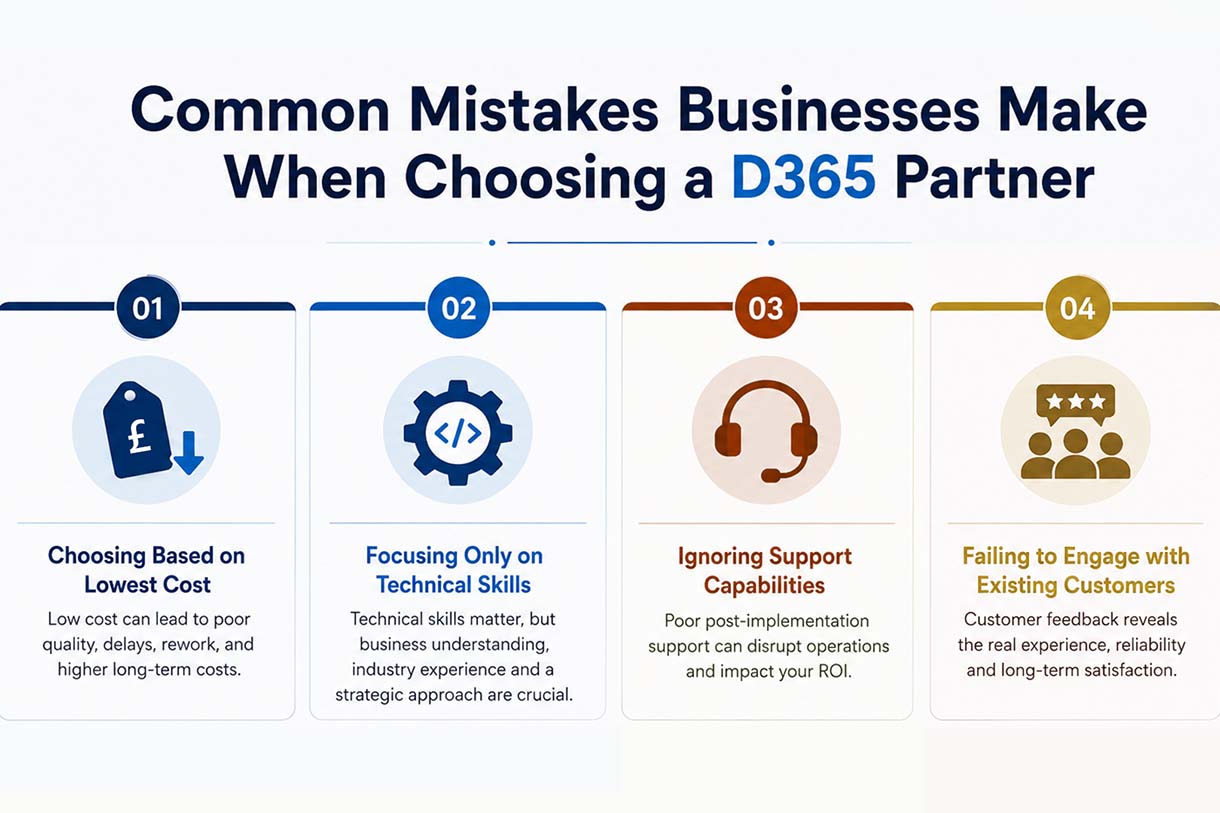
Even well-planned Dynamics 365 projects can encounter challenges if the wrong implementation partner is selected. Avoiding the following mistakes can help reduce project risk and improve long-term business outcomes.
Choosing Based on Lowest Cost
An initially low implementation quote may seem appealing, but it does not necessarily offer optimal value. Inexperienced partners may underestimate project complexity, leading to unforeseen costs, scope modifications, additional consultancy fees, and increased long-term expenditures.
Focusing Only on Technical Skills
While technical expertise is essential, successful ERP projects also demand comprehensive knowledge of finance and supply chain processes. Partners who concentrate exclusively on system configuration may fail to align the solution with organisational operational requirements.
Ignoring Support Capabilities
Many organisations prioritise implementation while neglecting post-go-live support. In the absence of reliable support services, organisations may experience delayed issue resolution, decreased productivity, and challenges in optimising the platform as business requirements change.
Failing to Engage with Existing Customers
Although case studies offer valuable information, direct engagement with existing customers frequently yields a more accurate assessment of a partner’s delivery methods, communication practices, and capacity to manage complex projects. Omitting this step may result in missed insights regarding the partner’s practical performance.
Looking for a trusted D365 Finance and Supply Chain Partner in the UK?
Contact Mercurius IT to discuss your goals and explore how our Dynamics 365 experts can help you deliver a successful ERP transformation.
Conclusion
Choosing the right Dynamics 365 Finance and Supply Chain partner is one of the most important decisions in your ERP journey. While the technology provides the foundation, successful outcomes depend on the partner’s ability to align the solution with your business processes, manage implementation risks, drive user adoption, and provide ongoing support.
When evaluating potential partners, look beyond cost and focus on factors such as industry experience, implementation methodology, technical expertise, customer success, and long-term support capabilities. A partner that understands both the technology and your business objectives will be better positioned to deliver lasting value.
At Mercurius IT, we combine deep Dynamics 365 expertise with industry knowledge and a proven delivery approach to help organisations across the UK modernise finance and supply chain operations with confidence. Whether you are planning a new implementation, upgrade, or optimisation project, choosing the right partner can make all the difference to your long-term success.
Frequently Asked Questions
What should I look for in a Dynamics 365 Finance and Supply Chain partner?
Look for proven FSCM implementation experience, industry expertise, certified consultants, strong project governance, integration capabilities, and ongoing support services.
How do I compare Dynamics 365 implementation partners in the UK?
Compare partners based on industry experience, project methodology, customer references, support capabilities, Microsoft credentials, and overall value rather than implementation cost alone.
Why is industry experience important when choosing a D365 partner?
Industry experience helps partners understand sector-specific processes, compliance requirements, operational challenges, and best practices, reducing implementation risk and accelerating time to value.
How much does a Dynamics 365 Finance and Supply Chain implementation cost in the UK?
Costs vary depending on business size, process complexity, integrations, customisations, and deployment scope. The implementation partner’s experience and delivery model also influence overall project costs.
Should I choose a local UK Dynamics 365 partner?
A UK-based partner can offer advantages such as local regulatory knowledge, easier collaboration, regional support coverage, and experience working with similar UK organisations.