

Quick Summary
D365 Customer Service enables UK manufacturers to streamline after-sales operations, lower service costs, improve response times, and generate new revenue with data-driven, connected service management.
Key Takeaways
- After-sales services deliver higher margins than product sales in the manufacturing sector.
- UK manufacturers need to adopt service-led models to remain competitive.
- D365 provides unified, AI-driven management of the service lifecycle.
- Integrated data enhances service speed, uptime, and customer retention.
- Modern after-sales functions as a strategic growth driver, not merely a support service.
Profit margins are declining, customer expectations are increasing, and acquiring new business is becoming more challenging. However, many UK manufacturers continue to regard after-sales as merely a support function rather than a potential growth driver.
In reality, industry dynamics are evolving. Manufacturers are increasingly adopting service-led models in which ongoing support and customer experience create sustained value. After-sales activities can yield higher margins than initial product sales. Furthermore, recent UK reports indicate that manufacturing and services now function as an integrated value chain.
Currently, after-sales represent the principal domain for achieving customer loyalty, higher margins, and competitive differentiation, rather than the initial point of sale.
In this blog, we’ll explain how Dynamics 365 Customer Service enables UK manufacturers to streamline after-sales operations, enhance service efficiency, and transform support into a scalable revenue driver.
The Increasing Importance of After-Sales Excellence for UK Manufacturers
The UK manufacturing sector contributes approximately 10% to the national GDP and supports around 3 million jobs, with total sales reaching £452 billion. Including associated services, the sector’s overall economic impact is even greater.
However, achieving growth has become increasingly challenging. Intensifying competition, shrinking margins, and heightened price sensitivity have made it difficult for manufacturers to rely solely on new sales.
At the same time, after-sales operations remain a significant challenge for many manufacturers.
- Fragmented service management systems
- Insufficient visibility of installed assets
- Delayed response times that impact service level agreements (SLAs)
- Inefficiencies in spare parts management and service processes
- Growing demand for real-time customer support
This shift shows that growth now depends not only on new sales, but also on how effectively manufacturers monetise the customer lifecycle after the initial transaction.
What Modern After-Sales Management Actually Looks Like
Modern after-sales management has evolved from a reactive approach to a strategic one. Leading manufacturers now adopt proactive, connected, and insight-driven models.
- Proactive service: Anticipate and address issues before they affect customers.
- Connected operations: Coordinate field service and customer support to resolve issues more quickly.
- Data-driven decisions: Leverage real-time insights to optimise service performance.
- Outcome-based models: Shift focus from issue resolution to delivering measurable customer outcomes.
This shift reflects the growing trend of servitisation, combining products and services to create sustained value. In short, the focus is no longer on service delivery alone, but on delivering continuous value across the customer lifecycle.
Turn After-Sales into a Competitive Advantage
Improve service responsiveness, increase customer retention, and create new revenue opportunities with a connected after-sales strategy.
How D365 Customer Service Transforms After-Sales Management
D365 Customer Service enables UK manufacturers to transition from fragmented, reactive support to a connected, AI-driven after-sales model. This shift improves efficiency, reduces costs, and creates new service-led revenue opportunities.
Unified Case Management Across the Service Lifecycle
D365 Customer Service consolidates all service interactions into a single platform, eliminating silos between teams and systems. Requests from email, chat, or phone are tracked centrally with full context, enabling faster and more consistent resolutions. This approach delivers a seamless customer experience and reduces service friction throughout the lifecycle.
AI-Powered Issue Resolution (Copilot & Automation)
With built-in AI and Copilot, D365 automates case routing, prioritisation, and response generation. Agents receive real-time guidance through relevant knowledge articles and suggested actions, reducing manual effort and decision delays. This accelerates resolution times, lowers service costs, and improves agent productivity.
Connected Field Service & Asset Visibility
D365 integrates customer service with field operations and installed product data, providing teams with complete visibility into asset history, service records, and performance. This supports proactive scheduling and predictive maintenance, allowing manufacturers to resolve issues before they escalate. As a result, downtime is minimised and customer trust is strengthened.
Spare Parts & Service Order Intelligence
Managing spare parts efficiently is critical in after-sales. D365 enables better coordination between service requests, inventory, and scheduling. With improved visibility into parts availability and intelligent service planning, businesses can reduce delays, avoid stockouts, and streamline service execution, addressing the complexity of after-sales supply chains.
Customer Insights & Service Analytics
D365 offers real-time dashboards and analytics to monitor service performance, SLA adherence, and customer sentiment. Leaders gain clear visibility into strengths and areas for improvement, enabling data-driven decisions that optimise service delivery and enhance customer satisfaction.
Impact of Dynamics 365 Customer Service
Implementation of D365 Customer Service enables manufacturers to resolve customer issues more efficiently, resulting in improved retention rates and stronger business relationships. Enhanced visibility into customer needs and service history facilitates the identification of upsell and cross-sell opportunities, thereby transforming service interactions into revenue-generating activities.
In fact, the impact of D365 Customer Service goes beyond operational improvements. It actually delivers real business outcomes.
- Organisations have seen up to 315% ROI with payback in less than 6 months, making it a high-impact, fast-return investment
- Average handling time reduced by up to 40%, enabling faster and more efficient issue resolution
- First-call resolution improved by up to 20%, reducing repeat interactions and service effort
When after-sales is powered by the right platform, it becomes a measurable driver of efficiency, revenue, and ROI, not just a support function.
Improve Service Performance with D365 Customer Service
Connect service teams, asset data, and customer interactions to reduce resolution times and increase service profitability.
Implementation Considerations for UK Businesses
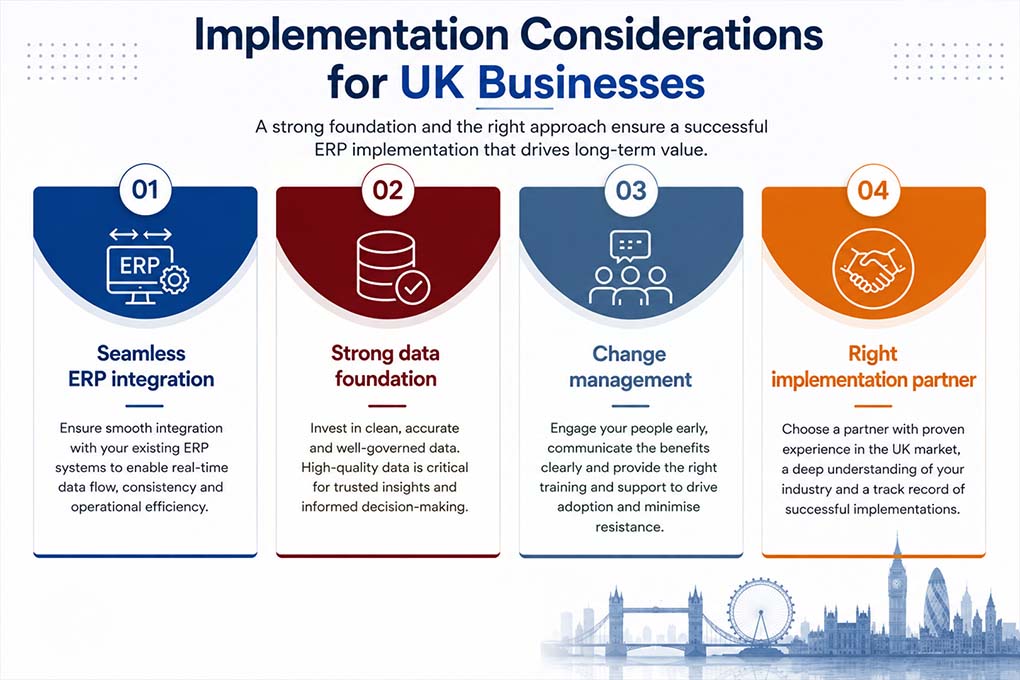
To maximise the value of D365 Customer Service, a focused and well-structured approach is essential.
- Seamless ERP integration: Aligning with D365 Finance and Supply Chain ensures end-to-end visibility across orders, inventory, and service operations
- Strong data foundation: Clean, structured data around installed assets and service history is key to enabling automation and insights
- Change management: Equipping service teams to adopt new processes and AI-driven workflows is essential for success
- Right implementation partner: A partner-led approach helps accelerate deployment, reduce risk, and align the solution with business goals
The difference between implementation and impact depends on how well these elements are executed.
Your after-sales operations are costing you more than you think.
See how D365 Customer Service can streamline service delivery and unlock new revenue streams.
Conclusion
After-sales functions have evolved beyond traditional support roles to become profit drivers, retention tools, and key differentiators in the competitive manufacturing sector.
D365 Customer Service enables UK manufacturers to transition from reactive support to predictive, insight-driven service models. This capability allows organisations to monetise the entire customer lifecycle and deliver consistent, high-quality customer experiences at scale.
The primary advantage is realised through effective implementation. With an appropriate strategy and partner, after-sales operations can become a sustainable source of business growth.
At Mercurius IT, we help UK manufacturers obtain the full potential of Microsoft Dynamics 365 and turn after-sales into a measurable business advantage
Frequently Asked Questions
How does Dynamics 365 Customer Service improve after-sales operations for manufacturers?
Dynamics 365 Customer Service centralises customer interactions, service requests, asset history, and service records within a single platform. This helps manufacturers improve response times, automate service workflows, increase visibility, and deliver more efficient after-sales support.
Can Dynamics 365 Customer Service help increase service revenue?
Yes. By improving customer retention, identifying upsell opportunities, reducing service inefficiencies, and enabling proactive service models, Dynamics 365 Customer Service helps manufacturers transform after-sales operations into a revenue-generating function.
How does AI support after-sales management in Dynamics 365 Customer Service?
Built-in AI and Copilot capabilities automate case routing, prioritisation, knowledge recommendations, and agent guidance. This reduces manual effort, improves service consistency, and accelerates issue resolution.
Can Dynamics 365 Customer Service integrate with Dynamics 365 Finance and Supply Chain Management?
Yes. Dynamics 365 Customer Service integrates with Dynamics 365 Finance and Supply Chain Management, providing visibility across service operations, inventory, orders, and customer interactions.
Can Dynamics 365 Customer Service integrate with existing business systems?
Yes. Dynamics 365 Customer Service integrates with Microsoft 365, Teams, Outlook, ERP systems, Power Platform, and various third-party applications to create a connected customer service environment.
Why are manufacturers investing more in after-sales service management?
Manufacturers are increasingly focusing on after-sales services because they improve customer retention, generate recurring revenue, create competitive differentiation, and often deliver higher margins than product sales alone.